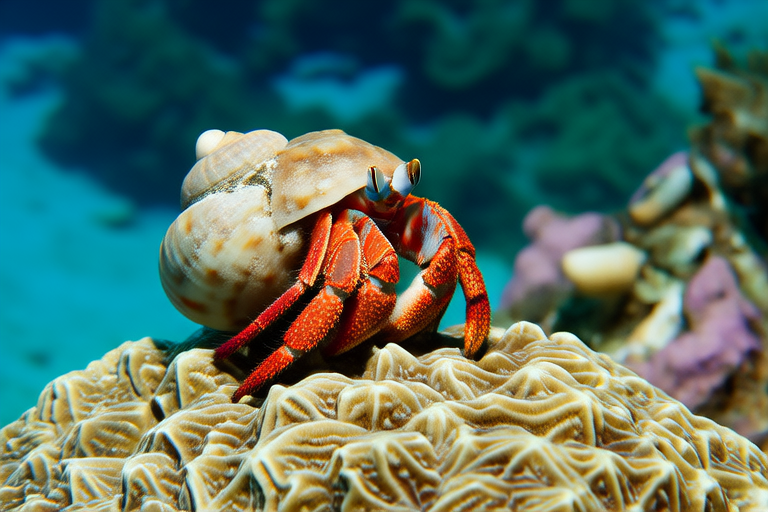
The Intriguing Life of Hermit Crabs: Shell-Swapping Rituals and More
Hermit crabs are fascinating creatures with a unique lifecycle and behavior centered around their shell-swapping rituals. These crustaceans are known for their remarkable ability to adapt and thrive in diverse marine environments. Understanding their lifestyle provides insight into their ecological importance and the intricate dynamics of their existence.
Shell-Swapping: The Heart of Hermit Crab Behavior
The most distinctive aspect of hermit crab behavior is their shell-swapping ritual. Unlike other crabs, hermit crabs do not have a hard exoskeleton to protect their soft abdomens. Instead, they rely on discarded mollusk shells for shelter, which they carry throughout their lives. This adaptation allows them to avoid predation and environmental stressors. As hermit crabs grow, they must find larger shells to accommodate their expanding bodies, leading to frequent shell exchanges.
The process of transitioning from one shell to another is both delicate and strategic. Hermit crabs often gather in groups during these events, forming what is known as a ‘shell train.’ In this formation, each crab tries on multiple shells before settling on one. This communal activity ensures safety from predators while also increasing the chances of finding a suitable shell. Once a crab finds a new home, it quickly moves in, sometimes even fighting for the best options.
Environmental Factors Influencing Shell Choices
Several environmental factors play crucial roles in determining the choice of a shell. Hermit crabs prefer shells that offer ample protection against predators and harsh weather conditions. They typically select shells based on size, shape, and availability. Shells that are too large or too small can be uncomfortable and impractical, while those that are too thin or damaged may provide insufficient protection.
Additionally, hermit crabs exhibit a preference for shells with smooth interiors and rounded openings, which facilitate easier entry and exit. The color and texture of the shell also matter; some species favor brightly colored shells that blend well with their surroundings, offering camouflage benefits.
Habitat Preferences and Challenges
Hermit crabs inhabit a wide range of marine environments, from shallow coastal waters to deep ocean floors. They are commonly found in coral reefs, seagrass beds, and sandy beaches. These habitats provide ample food sources and hiding spots, making them ideal for hermit crabs. However, the availability of suitable shells poses a significant challenge. As human activities such as pollution and overfishing increase, the number of available shells decreases, forcing hermit crabs to compete more fiercely for limited resources.
In response to this challenge, some hermit crab species have adapted by utilizing alternative materials. For instance, the coconut crab, a terrestrial hermit crab species, uses coconut shells as shelters. This adaptation demonstrates the resourcefulness and resilience of these animals in the face of changing environmental conditions.
Species Diversity and Social Behavior
There are over 1,200 recognized species of hermit crabs, each with its own distinct characteristics and behaviors. While all hermit crabs share the common trait of using shells for protection, there are notable differences in their appearance, size, and habitat preferences. Some species, like the purple-clawed hermit crab, are known for their vibrant colors and striking patterns, while others, such as the deep-sea hermit crab, are adapted to live in extreme depths where light is scarce.
Hermit crabs are generally social animals, often living in colonies that can consist of hundreds or even thousands of individuals. Within these colonies, there is a clear hierarchy, with larger, stronger crabs occupying the best shells. Smaller crabs, in turn, must settle for less desirable options. This social structure ensures that all members of the colony have access to shelter, albeit at varying levels of quality.
The Role of Hermit Crabs in Marine Ecosystems
Hermit crabs play a vital role in marine ecosystems by acting as scavengers and decomposers. By consuming dead organisms and organic debris, they help recycle nutrients within their habitats. This activity supports the growth of algae and other primary producers, contributing to the overall health and productivity of the ecosystem. Furthermore, hermit crabs serve as prey for various marine predators, including fish, birds, and larger crustaceans, thus playing an important role in the food chain.
Despite their ecological significance, hermit crabs face numerous threats due to human activities. Overfishing, habitat destruction, and pollution have led to declines in hermit crab populations worldwide. Conservation efforts are underway to protect these valuable creatures and their habitats, ensuring their continued contribution to marine ecosystems.
Interesting Facts About Hermit Crabs
- Hermit crabs are not true crabs but belong to the superfamily Paguroidea within the infraorder Anomura.
- Some hermit crab species, like the giant hermit crab, can grow up to 30 centimeters long.
- Hermit crabs are capable of regenerating lost limbs, a feature that aids in their survival.
- Female hermit crabs carry their eggs on their abdomens until they hatch, a process that can take several weeks.
- Hermit crabs are highly sensitive to changes in water temperature and salinity, making them excellent indicators of environmental health.
Conclusion
The lifecycle and behavior of hermit crabs, particularly their shell-swapping rituals, offer a window into the complex world of marine life. Their adaptability and resourcefulness in the face of environmental challenges highlight the resilience of nature. By understanding and appreciating these fascinating creatures, we can better appreciate the intricate balance of marine ecosystems and work towards their conservation.
