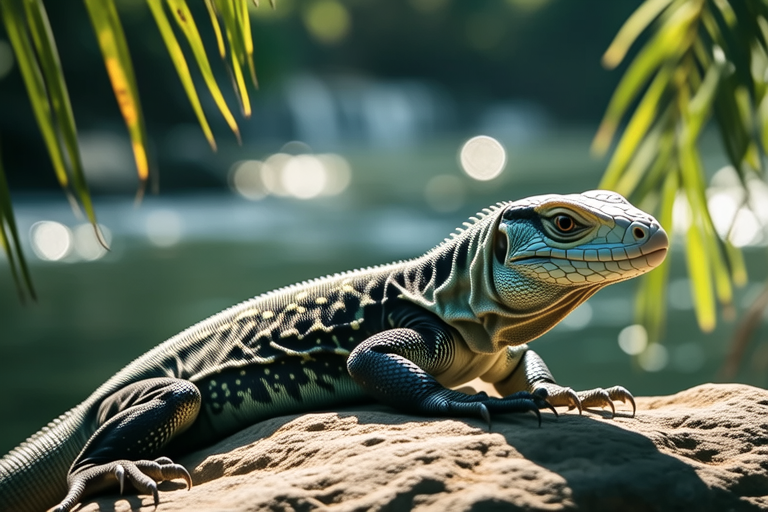
Top 10 Fascinating Facts About the Lethal Yet Majestic Water Monitor
The water monitor (Varanus salvator), a member of the Varanidae family, is one of the largest lizards in the world, known for its lethal prowess and majestic presence. Found across Southeast Asia, this remarkable reptile has adapted to both terrestrial and aquatic environments, making it a fascinating subject for wildlife enthusiasts and scientists alike.
1. Size and Physical Attributes
The water monitor can grow up to 3 meters in length, with males typically being larger than females. Its robust build includes a long tail, powerful limbs, and a sharp snout. The lizard’s skin is covered in small, overlapping scales that provide protection from predators and aid in swimming. These scales are often dark brown or black, sometimes with yellowish spots or bands, allowing the monitor to blend into its surroundings. Its keen eyesight, sharp sense of smell, and excellent hearing make it an efficient predator.
2. Agile and Versatile Swimmer
The water monitor is a highly skilled swimmer, capable of diving to depths of up to 4.5 meters. It uses its muscular tail as a propeller, while its webbed feet help it paddle through water. This adaptation allows the water monitor to explore underwater environments, where it can hunt for fish, crustaceans, and amphibians. Its ability to stay submerged for up to 30 minutes also enables it to ambush prey or escape from potential threats.
3. Hunting Techniques
Water monitors are opportunistic hunters, employing various strategies to catch their prey. They may lie in wait for unsuspecting animals or actively pursue them over land or water. Once they spot a target, they strike with lightning speed, using their sharp teeth and strong jaws to secure their meal. Monitors are known to eat a wide range of animals, including insects, birds, mammals, and other reptiles. They are also scavengers, feeding on carrion when available.
4. Unique Adaptations for Aquatic Life
In addition to its swimming abilities, the water monitor has several adaptations that allow it to thrive in aquatic environments. Its nostrils are positioned high on its snout, enabling it to breathe easily while partially submerged. It also has a valve-like structure at the base of its throat, which helps it swallow food underwater. These features contribute to its versatility as both a terrestrial and aquatic predator.
5. Behavior and Social Structure
Water monitors are solitary creatures, except during mating season. They are primarily diurnal, meaning they are most active during the day. Despite their solitary nature, they communicate with each other through body language, vocalizations, and chemical signals. Males compete for mates by engaging in aggressive displays and physical combat. After mating, females lay clutches of eggs in nests dug into the ground, and the hatchlings are independent from birth.
6. Habitat and Distribution
The water monitor inhabits a variety of environments, including tropical forests, mangrove swamps, and coastal areas. It is native to Southeast Asia, ranging from India and Sri Lanka to Indonesia and the Philippines. Due to its adaptability, it has also been introduced to parts of Africa and the Americas, where it has become an invasive species. Its preferred habitats include areas with abundant vegetation and water sources, providing ample opportunities for hunting and basking.
7. Role in Local Ecosystems
Water monitors play a crucial role in maintaining the balance of their ecosystems. As apex predators, they control populations of smaller animals, preventing overpopulation and promoting biodiversity. They also serve as indicators of environmental health, as changes in their numbers can reflect broader ecological shifts. Additionally, their scavenging behavior helps to recycle nutrients within their habitats.
8. Interaction with Humans
Water monitors have a complex relationship with humans. In some cultures, they are revered as symbols of strength and agility, while in others, they are feared due to their size and predatory nature. They are also hunted for their meat and skin, leading to population declines in certain regions. Conservation efforts are underway to protect these magnificent creatures and ensure their survival for future generations.
9. Myths and Misconceptions
There are many myths and misconceptions surrounding the water monitor. One common belief is that they are venomous, but this is false; their saliva contains bacteria that can cause infections if a bite occurs. Another myth is that they are aggressive towards humans, but in reality, they tend to avoid confrontation unless provoked. Understanding these facts helps dispel fears and promotes coexistence between humans and these remarkable lizards.
10. Scientific Insights
Recent studies have shed light on the water monitor’s biology and behavior. For instance, researchers have discovered that they possess a unique organ called Jacobson’s organ, which enhances their sense of smell. This organ allows them to detect chemical signals in the air and water, aiding in navigation and communication. Scientists are also exploring the potential medicinal properties of water monitor venom, which could lead to new treatments for human ailments.
In conclusion, the water monitor is a fascinating creature with many unique characteristics that make it stand out among reptiles. From its impressive size and agility to its versatile hunting techniques and important role in local ecosystems, this species continues to captivate and inspire those who study and appreciate it. By learning more about the water monitor, we can better understand and protect these magnificent animals for years to come.
