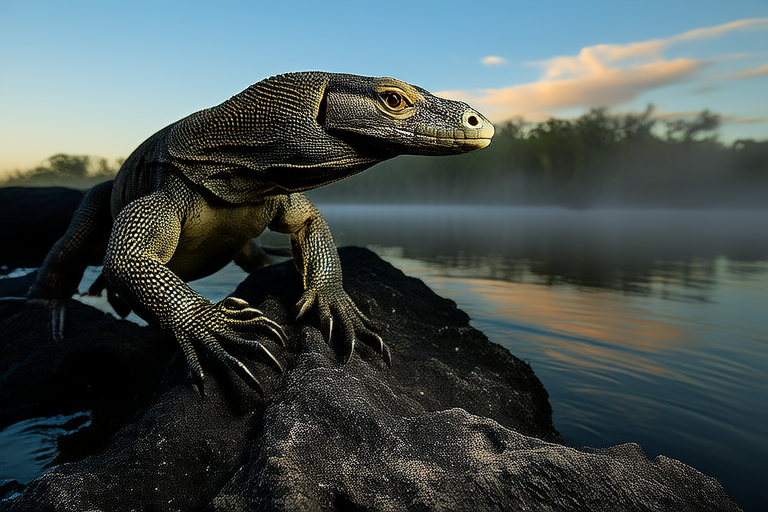
Water Monitors: A Dive into Their Unique World
In the vast tapestry of the animal kingdom, few creatures capture the imagination quite like the water monitor (Varanus salvator). These impressive reptiles are not only one of the largest lizards on Earth but also remarkable examples of adaptation to aquatic environments. With a range spanning from India to Southeast Asia, these creatures have developed a series of fascinating traits that allow them to thrive in both terrestrial and aquatic habitats. This article delves into the world of water monitors, exploring their unique adaptations, hunting techniques, habitat preferences, dietary habits, and conservation status.
Physical Characteristics and Adaptations
The water monitor is a sight to behold, with males reaching lengths of up to three meters. Their robust bodies are covered in scales that provide both protection and hydrodynamic efficiency. The lizard’s tail, accounting for about half its total length, is particularly well-adapted for swimming. It acts as a powerful rudder, enabling the water monitor to navigate through rivers, lakes, and even the open sea with ease.
One of the most striking features of the water monitor is its keen eyesight. Positioned high on the head, these eyes offer a panoramic view, allowing the lizard to spot prey or predators from great distances. Additionally, the water monitor has nostrils located at the tip of its snout, which serve as efficient breathing apparatuses when the lizard surfaces for air.
Water monitors are also known for their sharp claws, which are perfect for digging burrows, climbing trees, and gripping slippery surfaces. These claws, combined with powerful limbs, make the water monitor a formidable climber and swimmer. Their skin is highly sensitive to vibrations, aiding in detecting movement in the water or on land.
Hunting Techniques and Diet
Water monitors are opportunistic feeders, meaning they eat whatever is available. Their diet consists of fish, amphibians, small mammals, birds, eggs, and even carrion. They are skilled hunters, employing a variety of techniques depending on the situation. For example, they may ambush prey by hiding under rocks or vegetation near water bodies, waiting for unsuspecting animals to come close. Alternatively, they might actively search for food by wading into shallow waters, using their keen sense of smell to locate hidden prey.
When it comes to catching fish, water monitors display remarkable patience and precision. They can remain submerged for extended periods, thanks to their ability to hold their breath for up to 30 minutes. Once they’ve located their target, they strike with lightning speed, grabbing the fish with their powerful jaws and sharp teeth. Their agility in water is further enhanced by their streamlined bodies, allowing them to chase down swift-moving prey with ease.
Habitat Preferences
Water monitors are highly adaptable and can be found in a wide range of habitats, including mangrove swamps, rainforests, grasslands, and agricultural areas. They prefer areas near water bodies such as rivers, lakes, and coastal regions, where they can take advantage of both aquatic and terrestrial resources. In these environments, they find ample opportunities for hunting, basking, and sheltering.
Mangrove swamps are particularly important habitats for water monitors. The complex root systems of mangroves provide excellent hiding spots and nesting sites, while the brackish waters offer a rich source of food. Water monitors play a crucial role in these ecosystems by controlling populations of smaller animals and helping to maintain balance.
Interactions Within Their Ecosystem
As apex predators in many of their habitats, water monitors exert significant influence over local ecosystems. By preying on smaller animals, they help control population sizes and prevent any single species from dominating the environment. This balance ensures that all organisms, from plants to larger animals, have access to the resources they need to survive.
Water monitors also contribute to nutrient cycling within their ecosystems. Their feeding habits result in the redistribution of nutrients across different habitats, enriching soils and promoting plant growth. Furthermore, their burrowing activities create habitats for other species, such as insects and small mammals.
Conservation Status
Despite their resilience and adaptability, water monitors face numerous threats in the modern world. Habitat destruction, primarily due to deforestation and urbanization, poses a significant challenge to their survival. As humans continue to encroach upon natural habitats, water monitors lose valuable territory and resources. Additionally, the illegal pet trade and hunting for their meat and skin contribute to declining populations in some areas.
The International Union for Conservation of Nature (IUCN) lists the water monitor as “Least Concern” globally; however, localized declines have been reported in certain regions. Conservation efforts focus on protecting critical habitats, raising awareness about the importance of preserving these ecosystems, and implementing stricter regulations on the trade of water monitors.
Efforts to conserve water monitors often involve collaboration between governments, non-governmental organizations, and local communities. By working together, stakeholders can develop sustainable practices that benefit both people and wildlife. For instance, eco-tourism initiatives can provide economic incentives for conserving habitats while promoting responsible wildlife viewing.
Conclusion
The water monitor is a testament to nature’s ingenuity, showcasing how an organism can thrive in diverse environments through specialized adaptations. From their sleek bodies designed for efficient swimming to their versatile hunting techniques, these lizards embody the resilience and adaptability required to survive in today’s rapidly changing world. As we continue to explore and understand these remarkable creatures, it becomes increasingly clear that their preservation is vital for maintaining healthy ecosystems and ensuring biodiversity.
By supporting conservation efforts and raising awareness about the importance of protecting water monitors and their habitats, we can help ensure that future generations will have the opportunity to marvel at these magnificent creatures. Let us strive to protect not just the water monitors but also the intricate web of life they are a part of.
