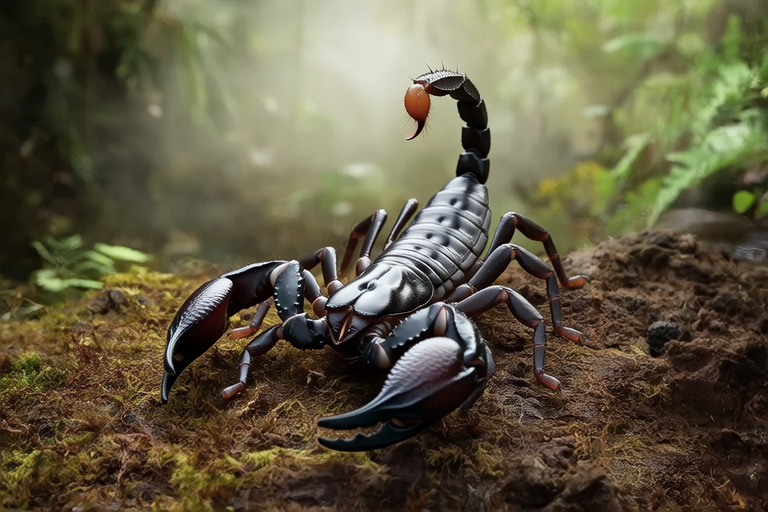
Heterometrus Spinifer: A Comprehensive Care Sheet for New Owners
Welcome to the world of Heterometrus Spinifer, commonly known as the Asian Forest Scorpion. This species, native to Southeast Asia, is a fascinating arachnid that has gained popularity among exotic pet enthusiasts. As a new owner, it’s crucial to understand the unique needs of your scorpion to ensure they thrive in captivity. This guide will provide you with all the necessary information to care for your Heterometrus Spinifer.
Introduction to Heterometrus Spinifer
The Heterometrus Spinifer is a medium-sized scorpion, typically reaching lengths of 4 to 6 inches. They are characterized by their robust build and a distinctive pattern of dark brown or black with lighter yellow or cream-colored markings. These scorpions are primarily nocturnal, spending most of their day hidden in burrows or under rocks, and emerging at night to hunt for prey. Their natural habitat includes tropical rainforests, where they live among dense vegetation and moist soil.
Natural Habitat and Behavior
In their natural environment, Heterometrus Spinifers inhabit areas with high humidity and moderate temperatures. They are adept at digging burrows in soft, moist soil, which provides them with shelter from predators and extreme weather conditions. These scorpions are solitary creatures, living alone except during mating season. They are skilled hunters, using their pincers to capture insects and small vertebrates, and their venomous sting to subdue larger prey.
Housing Requirements
Enclosure Size
Adequate space is essential for the well-being of your Heterometrus Spinifer. A terrarium measuring at least 12 inches long, 8 inches wide, and 8 inches tall is recommended for a single adult. The enclosure should be large enough to allow the scorpion to move around comfortably and dig burrows if desired. For multiple scorpions, increase the size of the enclosure proportionally.
Substrate Type
The substrate, or bedding material, should mimic the scorpion’s natural environment. A mix of coconut fiber and sphagnum moss works well, providing both moisture retention and a suitable surface for digging. The substrate should be at least 4 inches deep to allow for proper burrowing. Avoid using gravel or sand, as these can cause impaction if ingested.
Temperature and Humidity Levels
Maintaining the correct temperature and humidity levels is crucial for the health of your scorpion. The ideal temperature range for Heterometrus Spinifers is between 75°F and 85°F (24°C to 29°C). Use a heat mat placed beneath one side of the enclosure to create a temperature gradient, allowing the scorpion to regulate its body temperature by moving between warmer and cooler areas. Humidity levels should be kept between 70% and 80%. Regular misting of the enclosure helps maintain this level, but ensure the substrate remains damp, not soggy.
Diet and Feeding Schedules
Heterometrus Spinifers are carnivorous, feeding on a variety of insects. A balanced diet consists of crickets, mealworms, and dubia roaches. Offer food every 7 to 10 days, depending on the size and age of the scorpion. Younger scorpions may require more frequent feedings. It’s important to gut-load feeder insects with nutritious foods before offering them to your scorpion. This ensures your pet receives the necessary vitamins and minerals for optimal health.
Handling Tips
While Heterometrus Spinifers are generally docile, they are still wild animals and should be handled with caution. Always wash your hands before and after handling your scorpion to prevent the transfer of harmful bacteria. Use a long pair of forceps or tongs when handling your scorpion to avoid direct contact. If you must handle your scorpion directly, approach it slowly and gently. Remember, even the most docile scorpion can become stressed and react defensively if mishandled.
Health Concerns and Signs of Illness
Like any pet, Heterometrus Spinifers can experience health issues. Common problems include dehydration, mite infestations, and improper shedding. Signs of illness may include lethargy, loss of appetite, difficulty moving, or changes in coloration. If you notice any of these symptoms, consult a veterinarian specializing in exotic pets immediately. Regular check-ups and maintaining optimal environmental conditions are key to preventing many health issues.
Enrichment Activities
To keep your Heterometrus Spinifer engaged and healthy, provide opportunities for mental and physical stimulation. Adding items like cork bark or flower pots to the enclosure encourages natural behaviors such as climbing and burrowing. Introducing new scents or textures occasionally can also stimulate your scorpion’s senses. However, always ensure any additions to the enclosure are safe and do not pose a risk of injury.
In conclusion, caring for a Heterometrus Spinifer requires dedication and attention to detail. By understanding their unique needs and providing a suitable environment, you can ensure your scorpion lives a long and healthy life. With proper care, your Heterometrus Spinifer will become a fascinating addition to your household, offering endless fascination and joy.
