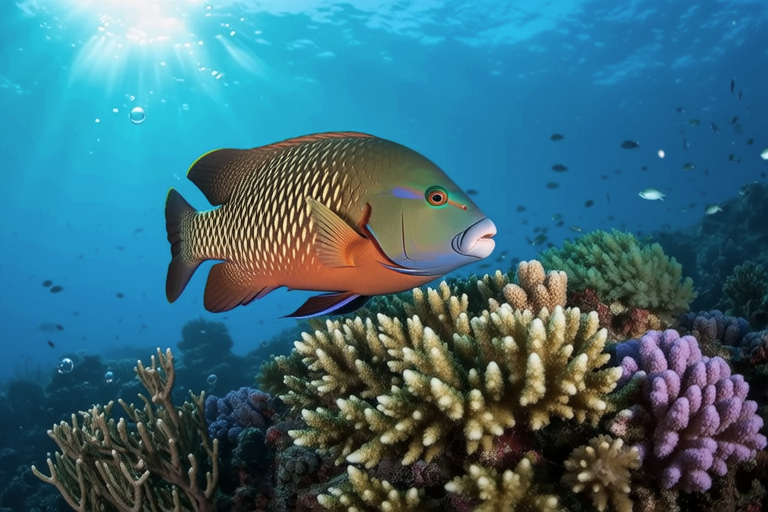
The Ecological Role of Parrot Fish: Guardians of Coral Reefs
In the vast and vibrant world of marine life, few creatures capture the imagination like parrot fish. Known for their striking colors and unique behaviors, these fish play a crucial role in the maintenance of coral reef health. This article delves into the significant ecological functions that parrot fish serve, focusing particularly on their grazing behavior and its impact on algae control. We will explore how this activity promotes biodiversity and contributes to the resilience of coral reefs against environmental stresses.
Introduction to Parrot Fish
Parrot fish are a group of approximately 90 species found primarily in tropical and subtropical waters around the world. They are named for their beak-like jaws, which they use to scrape algae off of coral reefs. These fish come in a variety of colors, from bright yellows and blues to deep purples and greens, making them a visual treat for divers and snorkelers alike. Their vibrant appearance is not just for show; it serves as a protective mechanism, warning potential predators of their spiny scales and tough skin.
The Grazing Behavior of Parrot Fish
One of the most remarkable aspects of parrot fish is their grazing behavior. Using their strong teeth, they scrape algae from the surface of coral reefs. This process, known as bioerosion, is essential for the health of the reef ecosystem. Without parrot fish, algae would overgrow the coral, potentially smothering it and preventing new growth. The fish’s diet consists mainly of algae and small invertebrates, but their primary food source is the algae that grows on coral surfaces.
During their feeding, parrot fish also consume coral polyps, inadvertently breaking down the coral structure. However, this seemingly destructive act is vital for the reef’s health. By breaking down old coral, they help recycle nutrients back into the water, promoting the growth of new coral. This continuous cycle of consumption and excretion plays a critical role in maintaining the balance of the reef ecosystem.
Impact on Algae Control
Algae can be both beneficial and detrimental to coral reefs. While some types of algae provide essential nutrients to the ecosystem, others can outcompete corals for space and resources. Overgrowth of algae can lead to a decline in coral cover, reducing the overall health and biodiversity of the reef. Parrot fish act as natural algae controllers, keeping their populations in check.
Research has shown that areas with high parrot fish populations tend to have lower levels of harmful algae. For example, studies conducted in the Caribbean have demonstrated that parrot fish significantly reduce the presence of macroalgae, which can otherwise dominate the reef environment. By controlling algae growth, parrot fish help maintain the delicate balance necessary for the survival of coral reefs.
Promoting Biodiversity
The grazing activities of parrot fish contribute to the promotion of biodiversity within coral reef ecosystems. By preventing algae from overwhelming the reef, they create space for a wide variety of other organisms to thrive. Corals, invertebrates, and fish all rely on the structural complexity provided by healthy reefs. When algae are controlled, more diverse habitats are available for these species, leading to increased biodiversity.
This biodiversity is crucial for the resilience of coral reefs. A diverse ecosystem is better equipped to withstand environmental stresses such as climate change, pollution, and overfishing. Different species within the ecosystem can adapt and recover at different rates, providing a buffer against disturbances. Parrot fish, through their role in maintaining healthy coral reefs, indirectly support this diversity and resilience.
Interdependence Between Parrot Fish and Coral Reefs
The relationship between parrot fish and coral reefs is one of mutual dependence. While parrot fish rely on the reefs for food and shelter, the reefs themselves benefit from the fish’s grazing behavior. This interdependence highlights the importance of preserving both parrot fish populations and coral reefs.
For instance, in the Great Barrier Reef, Australia, the presence of parrot fish has been linked to higher coral cover and lower levels of disease. Similarly, in the Maldives, where parrot fish populations have declined due to overfishing, there has been a noticeable increase in macroalgae and a decrease in coral health. These examples illustrate the critical role that parrot fish play in maintaining the health of coral reefs.
Challenges and Conservation Efforts
Despite their importance, parrot fish populations face numerous threats. Overfishing, habitat destruction, and climate change all pose significant risks to these vital fish. In many parts of the world, parrot fish are heavily fished for their meat and vibrant colors. This overfishing can lead to a decline in their numbers, disrupting the delicate balance of the reef ecosystem.
To address these challenges, various conservation efforts are underway. Marine protected areas (MPAs) have been established to protect both parrot fish and their habitats. These areas restrict fishing and other activities that could harm the ecosystem, allowing parrot fish populations to recover. Additionally, education and awareness campaigns aim to inform local communities about the importance of parrot fish and encourage sustainable fishing practices.
Conclusion
The ecological role of parrot fish in maintaining coral reef health cannot be overstated. Through their grazing behavior, they control algae growth, promote biodiversity, and contribute to the resilience of coral reefs against environmental stresses. Their interdependence with coral reefs underscores the need for conservation efforts to protect both these fish and their habitats. By understanding and appreciating the vital role that parrot fish play, we can work towards preserving the health and beauty of our precious coral reefs for future generations.
