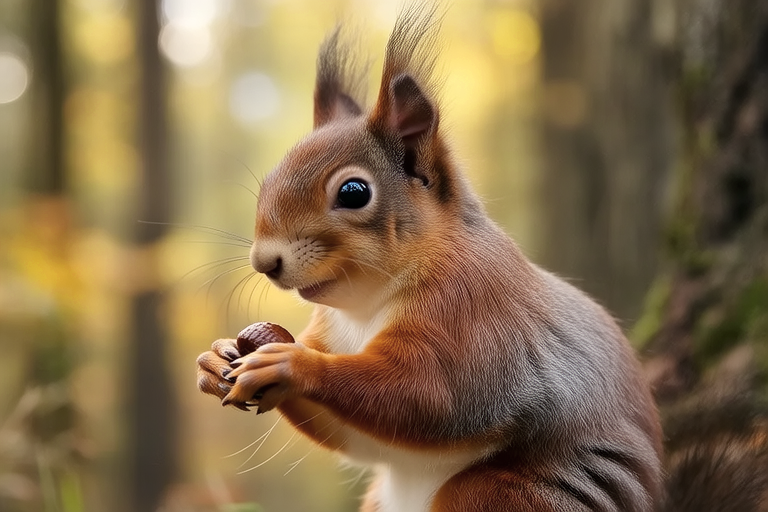
Top 7 Fascinating Facts About Squirrels You Never Knew
Squirrels, those bushy-tailed creatures darting through parks and forests, are more than just cute critters. They play crucial roles in their ecosystems, and their behaviors are filled with surprising quirks. Here’s a dive into seven fascinating facts about squirrels that will make you see them in a new light.
1. Squirrels Have Remarkable Memory Skills
Did you know that squirrels have an extraordinary ability to remember where they stash their food? This skill is particularly vital during winter when food sources become scarce. Squirrels bury nuts and seeds throughout their territory, sometimes hundreds at a time. They can recall the location of these caches even after months, thanks to their impressive spatial memory. Scientists believe this ability stems from a combination of scent recognition and visual landmarks. For instance, studies have shown that squirrels can remember the exact spot where they buried a nut up to nine months later. This exceptional memory helps them survive harsh conditions and ensures the propagation of plants through seed dispersal.
2. They Can Adapt to Urban Environments
In cities and towns across the globe, squirrels have made themselves at home. These adaptable animals have learned to thrive amidst concrete jungles. They navigate busy streets, climb tall buildings, and find food in unexpected places. Squirrels have developed strategies to avoid predators and humans alike. Their agility and problem-solving skills are key to their success in urban settings. One notable adaptation is their ability to use trash cans as feeding stations or even as hiding spots. Research has also shown that urban squirrels are less afraid of people, possibly because they have learned that humans generally pose no threat. This adaptability underscores the resilience and intelligence of these small mammals.
3. Squirrels Are Not Always Solitary
While many people think of squirrels as solitary creatures, they actually form complex social structures. During certain times of the year, such as mating seasons or when resources are abundant, squirrels may gather in groups. These gatherings can serve various purposes, including mutual grooming, which helps strengthen bonds within the group. In some species, like the red squirrel, there’s a clear hierarchy among males and females. Female red squirrels, for example, are often dominant over males, leading to interesting interactions during breeding periods. Understanding these social dynamics provides insight into the complexity of squirrel behavior and highlights their capacity for cooperation and competition.
4. Squirrels Play a Crucial Role in Forest Health
Beyond being charming little visitors to our backyards, squirrels significantly impact forest health. By burying seeds, they act as nature’s gardeners, helping to plant new trees. This process, known as seed dispersal, is essential for maintaining biodiversity. When squirrels forget the locations of their caches, the seeds germinate, contributing to the growth of new vegetation. Additionally, their digging activities aerate the soil, improving its quality. Studies have shown that areas frequented by squirrels often exhibit higher levels of tree regeneration compared to those without them. Thus, squirrels play a pivotal role in shaping the ecological landscape of forests.
5. The Diversity of Squirrel Species
The squirrel family encompasses over 200 species worldwide, showcasing remarkable diversity. From the tiny African pygmy squirrel, weighing less than an ounce, to the massive Indian giant squirrel, measuring nearly three feet long, squirrels come in all shapes and sizes. Each species has adapted to its specific environment, whether it be high mountains, dense jungles, or open plains. Some squirrels, like the flying squirrel, have evolved gliding membranes that allow them to travel between trees with ease. Others, such as ground squirrels, have burrowed deep into the earth, creating extensive tunnel systems. This variety underscores the adaptability of squirrels and their importance in different ecosystems.
6. Squirrels Are Expert Athletes
Squirrels are true athletes, excelling in agility, speed, and balance. Their powerful hind legs enable them to leap distances up to ten times their body length, allowing them to escape predators and reach food sources. Their bushy tails serve multiple purposes, including balance and communication. For instance, when a squirrel flicks its tail, it could be signaling danger to others or simply showing off. Moreover, squirrels have sharp claws that help them grip onto surfaces, making them adept climbers. Observations have revealed that squirrels can run up and down trees at remarkable speeds, often outmaneuvering potential threats. This athleticism is crucial for their survival in both natural and urban environments.
7. Squirrels Communicate Through Body Language
Like many other animals, squirrels communicate through a range of vocalizations and body movements. Their chirps, barks, and chatters can convey warnings, excitement, or distress. However, much of their communication relies on subtle body language. For example, raising their tail can signal aggression or fear, depending on the context. Similarly, flattening their ears might indicate submission or alertness. Scientists studying squirrel behavior have noted that these non-verbal cues are integral to their interactions, helping to maintain social order and ensure the safety of the group. Understanding these signals offers a deeper appreciation of the sophisticated communication networks within squirrel communities.
Summary: A Unique and Intriguing Animal
Squirrels are not just adorable nuisances in parks; they are complex, intelligent, and vital components of ecosystems. From their exceptional memory and athletic abilities to their social structures and diverse species, squirrels offer a wealth of fascinating traits. Their adaptability, whether in urban settings or forested areas, showcases their resilience and intelligence. By playing critical roles in seed dispersal and forest health, squirrels contribute significantly to environmental sustainability. As we continue to explore these remarkable creatures, it becomes increasingly clear why they deserve our admiration and respect.
