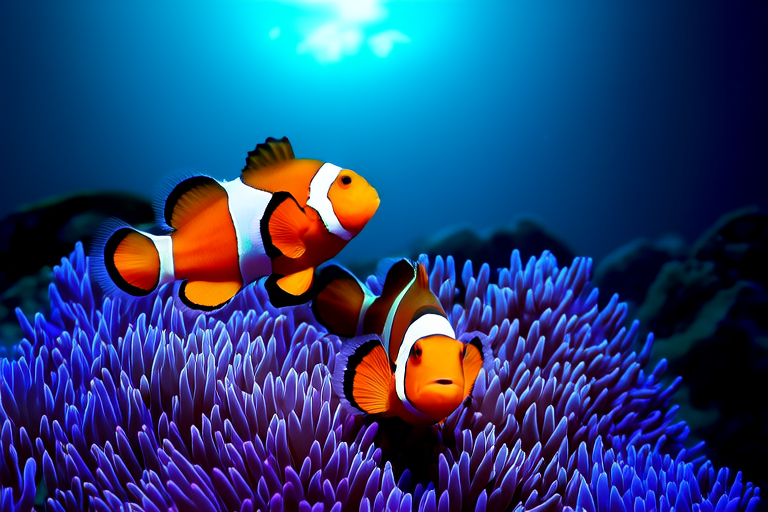
The Intricate Relationship Between Clownfish and Anemones
One of the most iconic and visually striking partnerships in the ocean is that between clownfish and anemones. This symbiotic relationship is a marvel of nature, where both species benefit from each other’s presence. The clownfish, with its vibrant colors and playful demeanor, finds refuge and protection within the tentacles of the anemone, while the anemone receives nutrients and assistance in maintaining its environment. This article delves into the complex interplay between these two organisms, exploring the protective advantages the anemone provides for the clownfish, the nutritional benefits clownfish offer to anemones, and the unique adaptations each has developed to support this partnership.
Protection Provided by the Anemone
The anemone serves as a fortress for the clownfish, offering protection against predators through its venomous tentacles. These tentacles are lined with nematocysts, microscopic stinging cells that can paralyze or kill prey and deter potential threats. However, clownfish have evolved a remarkable resistance to the anemone’s sting, allowing them to navigate safely among the tentacles. Recent studies have revealed that clownfish secrete a mucus layer on their skin that contains sugars similar to those found in the anemone’s tissue. This mucus acts as a shield, preventing the activation of the nematocysts. Scientists believe that over time, clownfish have adapted to produce these specific sugars through a process known as convergent evolution, where different species independently evolve similar traits to cope with similar environments.
In addition to physical protection, the anemone also offers a safe haven for clownfish to lay their eggs. The clownfish carefully selects a site within the anemone’s tentacles, ensuring that the eggs are well-protected from predators. The male clownfish takes on the role of egg caretaker, fanning the eggs with his fins to provide oxygen and ward off potential threats. This behavior not only increases the chances of successful hatching but also demonstrates the depth of commitment the clownfish shows towards its partner and offspring.
Nutritional Benefits for the Anemone
While the anemone provides shelter and protection, the clownfish reciprocates by offering nutritional benefits. One of the primary ways in which clownfish contribute to the anemone’s diet is through the transfer of nutrients from their feces. Clownfish consume a variety of foods, including algae, zooplankton, and small invertebrates. When they defecate within the anemone, the anemone absorbs these nutrients, which can be crucial for its growth and survival. This mutual exchange of nutrients ensures that both organisms remain healthy and thrive in their shared habitat.
Moreover, clownfish play a role in cleaning the anemone by removing parasites and detritus from its surface. By keeping the anemone free from debris and harmful organisms, the clownfish indirectly contributes to the overall health of its host. This cleaning behavior not only benefits the anemone but also enhances the living conditions for the clownfish, creating a harmonious and mutually beneficial environment.
Unique Adaptations Supporting the Partnership
The success of the clownfish-anemone relationship hinges on several unique adaptations that have evolved over millions of years. As mentioned earlier, the clownfish’s ability to resist the anemone’s sting is a critical adaptation that allows it to live safely among the tentacles. This resistance is not just a passive trait; it involves active chemical signaling between the two organisms. Research has shown that clownfish release certain chemicals that interact with the anemone’s sensory structures, essentially “talking” to the anemone and signaling that they are not a threat. This chemical communication helps establish and maintain the trust between the two species, ensuring that the anemone does not activate its nematocysts when the clownfish is present.
Another fascinating adaptation is the way in which clownfish have adapted their behavior to coexist with the anemone. For instance, clownfish are known to perform a behavior called “anemone waving,” where they rhythmically wave their fins over the anemone’s tentacles. This behavior is thought to stimulate the anemone’s feeding response, potentially increasing the likelihood of food particles being captured. It may also serve as a form of communication, reinforcing the bond between the clownfish and its host.
Recent Studies and Discoveries
Advances in genetic and molecular biology have provided new insights into the clownfish-anemone relationship. Recent studies have identified specific genes in both clownfish and anemones that are involved in the symbiotic relationship. These genes are responsible for producing the chemical signals and enzymes necessary for the exchange of nutrients and protection. By understanding the genetic basis of this partnership, scientists hope to uncover more about the evolutionary history of these species and how they have adapted to live together.
One particularly exciting discovery is the finding that some species of anemones can actually change their behavior based on the presence of clownfish. Researchers have observed that anemones with clownfish tend to have higher rates of photosynthesis, suggesting that the clownfish somehow enhance the anemone’s ability to produce energy through sunlight. While the exact mechanism behind this phenomenon is still under investigation, it underscores the complexity and depth of the relationship between these two species.
The Future of Clownfish and Anemones
As human activities continue to impact marine ecosystems, the future of clownfish and anemones remains uncertain. Coral reefs, which are home to many species of anemones and clownfish, are threatened by climate change, pollution, and overfishing. Protecting these delicate ecosystems is crucial for the survival of the clownfish-anemone relationship. Conservation efforts aimed at preserving coral reefs and reducing the impacts of climate change will help ensure that future generations can continue to marvel at this extraordinary partnership.
In conclusion, the relationship between clownfish and anemones is a testament to the wonders of nature. Through a combination of physical protection, nutrient exchange, and chemical communication, these two species have formed a symbiotic relationship that benefits both parties. As we continue to explore and understand this relationship, it becomes increasingly clear that the ocean is full of incredible stories waiting to be told. By appreciating and protecting these relationships, we can help ensure the continued survival of these fascinating creatures and the ecosystems they inhabit.
