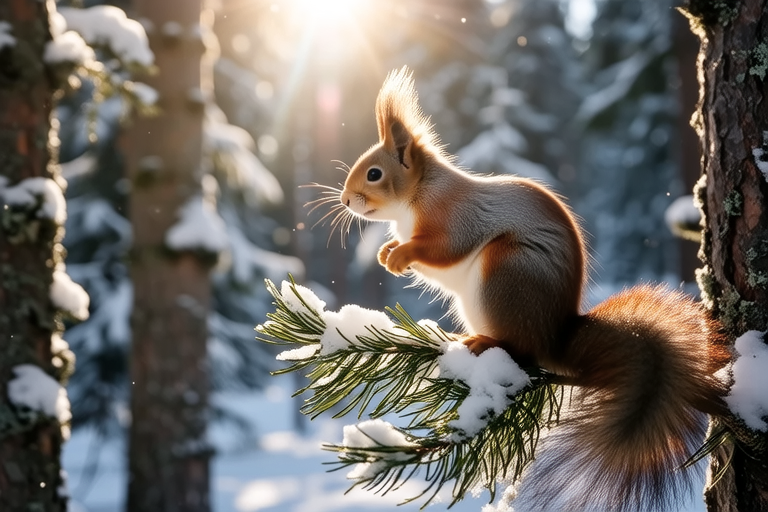
Squirrels in Winter: How These Tiny Animals Survive the Coldest Months
Winter brings a host of challenges for wildlife, especially for small creatures like squirrels. With temperatures dropping and food sources becoming scarce, these agile rodents must adapt their behaviors and physiology to survive the coldest months. This article delves into the fascinating world of squirrels during winter, exploring how they change their habits, store food, and endure harsh conditions in both rural and urban settings.
Behavioral Changes in Squirrels During Winter
As autumn progresses and the days grow shorter, squirrels undergo significant behavioral shifts in preparation for winter. Their daily routines become more focused on food collection and storage. Unlike some animals that hibernate, most squirrels remain active throughout the winter, though their activity patterns may change. They spend less time above ground and more time in their dens, emerging only when necessary to forage or defend territories.
During winter, squirrels also exhibit increased territoriality. Food becomes scarcer, leading to more intense competition among individuals. This can result in aggressive interactions, particularly around stored caches or remaining food sources. Understanding these behavioral adjustments helps us appreciate the complexity of their survival strategies.
Food Storage Techniques
One of the most remarkable aspects of squirrel behavior is their ability to store food. Squirrels employ various methods to ensure they have enough sustenance throughout the winter. The two primary types of storage are larder hoarding and scatter hoarding.
- Larder Hoarding: Some species, such as the eastern gray squirrel, gather large quantities of nuts and seeds and store them in a centralized location known as a larder. This approach requires significant energy investment upfront but offers easier access to food later.
- Scatter Hoarding: Other squirrels, like the red squirrel, prefer scatter hoarding. They bury individual nuts and seeds in multiple locations across their territory. While this method disperses risk (thievery by other animals), it also increases the effort needed to retrieve each item.
Regardless of the technique used, squirrels demonstrate impressive spatial memory, often recovering up to 90% of cached items. This ability not only ensures their survival but also plays a crucial role in forest regeneration by distributing seeds.
Hibernation vs. Active Winter Lifestyle
Not all squirrels adopt the same strategy for surviving winter. While many remain active, some species, such as the groundhog and the thirteen-lined ground squirrel, hibernate. Hibernating squirrels enter a state of torpor, where their metabolic rate slows down significantly, reducing energy consumption. They build insulated burrows underground, away from predators and extreme weather.
In contrast, tree squirrels like the eastern gray squirrel maintain an active lifestyle year-round. Instead of hibernating, they rely on stored food and fat reserves to sustain themselves during periods of low food availability. Their agility and adaptability allow them to navigate their environment efficiently, even in snow-covered landscapes.
This difference highlights the diversity within the squirrel family and underscores the importance of understanding local ecosystems when studying wildlife behavior.
Cold Weather Adaptations
Squirrels have evolved several physiological and behavioral adaptations to cope with cold temperatures. One key adaptation is their thick fur coat, which provides excellent insulation against the elements. Their coats grow thicker in the fall, offering additional warmth during the colder months.
Another important adaptation is their ability to lower their body temperature slightly, entering a state called torpor. This temporary reduction in metabolism allows them to conserve energy without fully hibernating. By alternating between periods of activity and torpor, squirrels can balance energy expenditure with the need to stay warm.
Additionally, squirrels often seek refuge in dens or nests lined with leaves, moss, and other materials. These cozy shelters help retain heat and protect them from wind and precipitation. In urban areas, squirrels may take advantage of man-made structures, such as attics or crawl spaces, to find shelter.
Survival Strategies in Urban Environments
Urban squirrels face unique challenges compared to their rural counterparts. Cities offer abundant human-provided resources, such as bird feeders, compost piles, and garbage bins, which can supplement natural food sources. However, urban environments also present dangers, including traffic, domestic pets, and exposure to pollutants.
To thrive in cities, squirrels have adapted their behaviors accordingly. They become more opportunistic, scavenging for food wherever available. Urban squirrels are also known to be bolder than their rural relatives, approaching humans more readily in search of handouts. This increased boldness can sometimes lead to conflicts with people, as squirrels may become pests if not managed properly.
Despite these challenges, urban squirrels have proven remarkably resilient. Many cities now recognize the importance of providing green spaces and parks, which serve as vital habitats for wildlife. Efforts to create interconnected green corridors can further enhance urban squirrel populations by allowing them to move safely between areas.
Survival Strategies in Rural Environments
Rural squirrels depend heavily on natural food sources and must contend with different environmental pressures. Forests provide essential resources, including trees for nesting and nuts for caching. However, rural squirrels also face threats from predators and harsh weather conditions.
One of the most effective strategies for rural squirrels is forming social bonds. Groups of squirrels will often work together to defend common territories and share information about food sources. This cooperation increases their chances of survival, especially during times of scarcity.
Rural squirrels also benefit from the presence of mature forests, which offer diverse habitats and abundant food supplies. Conservation efforts aimed at preserving and restoring forests play a critical role in supporting squirrel populations. Maintaining healthy ecosystems ensures that these tiny animals have the resources they need to thrive.
Conclusion
Squirrels are remarkable survivors, equipped with a variety of strategies to endure winter’s challenges. From changing behaviors and storing food to adapting physically and socially, these small mammals demonstrate incredible resilience. Whether living in bustling cities or serene rural landscapes, squirrels continue to captivate our imaginations with their resourcefulness and adaptability.
Understanding how squirrels survive winter not only deepens our appreciation for nature but also highlights the importance of conservation efforts. By protecting habitats and minimizing human impacts, we can help ensure that these delightful creatures remain a vibrant part of our ecosystems for generations to come.
