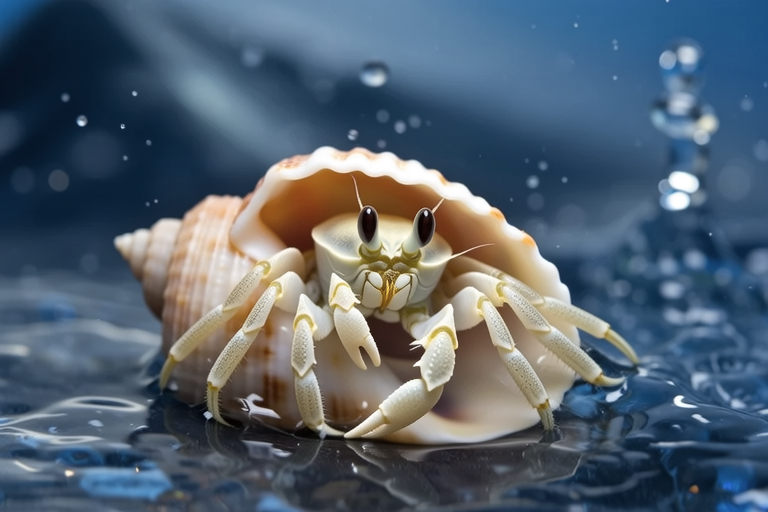
The Unique Life Cycle and Symbiotic Relationship of Pea Crabs
Pea crabs (Pinnotheridae) are a family of tiny crustaceans that have evolved to live inside the bodies of various marine hosts, including bivalves, sea cucumbers, and echinoderms. Their fascinating life cycle and symbiotic relationships with their hosts have intrigued scientists for decades. This article explores the unique adaptations of pea crabs, their contributions to marine ecosystems, and recent scientific findings about their behavior, reproduction, and role in the ocean’s food web.
The Life Cycle of Pea Crabs
Pea crabs begin their lives as planktonic larvae, drifting in the open ocean before finding suitable hosts. Once they locate a host, they undergo a series of molts to adapt to their new environment. The juvenile pea crabs enter the host through its soft parts or between the valves of bivalves. As they grow, they molt several times, shedding their exoskeletons and becoming more integrated with their host. Unlike many other symbionts, pea crabs do not consume their hosts but rather live in harmony with them.
Symbiotic Relationships with Marine Hosts
Pea crabs form symbiotic relationships with various marine hosts, including bivalves, sea cucumbers, and echinoderms. These relationships are often mutualistic, meaning both the pea crab and its host benefit from the association. For instance, pea crabs may help protect their hosts from predators by causing vibrations that deter potential attackers. In return, the host provides shelter and protection for the pea crab.
Protection from Predators
One of the most significant benefits of the symbiotic relationship between pea crabs and their hosts is protection from predators. By living inside the shells of bivalves or within the bodies of sea cucumbers, pea crabs are shielded from larger predators that might otherwise prey on them. Additionally, the vibrations caused by pea crabs’ movements can deter predators from attacking their hosts. This mutual protection helps both species survive in the challenging marine environment.
Enhanced Mobility and Feeding
Pea crabs also benefit from enhanced mobility and feeding opportunities provided by their hosts. Many pea crabs live inside bivalves, which can move around the ocean floor. By hitching a ride, pea crabs gain access to new areas and food sources without expending energy swimming. Furthermore, pea crabs can feed on the mucus and detritus produced by their hosts, ensuring a steady supply of nutrients.
Adaptations for Survival
Pea crabs have developed several remarkable adaptations to thrive in their symbiotic relationships. One of the most notable is their ability to modify their body shape to fit perfectly within the confines of their hosts. They can also adjust their coloration to match that of their hosts, providing camouflage and further protection from predators.
Body Shape Adaptation
Pea crabs have evolved to fit snugly within the shells of their bivalve hosts. Their flattened bodies allow them to slide easily between the valves, while their flexible appendages enable them to navigate tight spaces. This adaptation ensures that pea crabs can move freely within their hosts and avoid being crushed during valve closure.
Coloration Adaptation
To blend in with their hosts, pea crabs have developed the ability to change their coloration. By matching the hues of their bivalve hosts, pea crabs become nearly invisible to predators, increasing their chances of survival. This adaptation is particularly useful when the host is stationary or resting on the ocean floor, making it easier for predators to spot the crab.
Role in Marine Ecosystems
Beyond their role as mere inhabitants of shells, pea crabs play an essential part in marine ecosystems. They contribute to nutrient cycling, help maintain biodiversity, and influence the behavior of their hosts. Recent studies have shed light on the complex interactions between pea crabs and their environments, revealing the far-reaching effects of these tiny crustaceans.
Nutrient Cycling
Pea crabs play a crucial role in nutrient cycling within marine ecosystems. By consuming detritus and organic matter, they help break down complex compounds into simpler forms that can be used by other organisms. This process supports the growth of phytoplankton and other primary producers, which form the base of the marine food web. Additionally, pea crabs release nutrients back into the water column through their waste products, further enriching the ecosystem.
Maintaining Biodiversity
Pea crabs contribute to maintaining biodiversity in marine ecosystems by acting as keystone species. Their presence can influence the abundance and distribution of other organisms, creating a more diverse and resilient community. For example, the presence of pea crabs may encourage the growth of certain algae or bacteria that thrive in the microhabitats created by their hosts. This diversity can lead to increased stability and productivity within the ecosystem.
Influencing Host Behavior
Recent research has revealed that pea crabs can significantly influence the behavior of their hosts. For instance, studies have shown that the presence of pea crabs can alter the movement patterns of their bivalve hosts. This change in behavior may be due to the vibrations caused by the pea crabs’ movements or the increased energy expenditure required to carry the extra weight. Understanding these interactions can provide valuable insights into the dynamics of marine ecosystems.
Behavior and Reproduction Strategies
Pea crabs exhibit a range of behaviors and reproductive strategies that ensure their survival and propagation. Mating rituals, parental care, and brood size variation are just a few examples of the fascinating aspects of pea crab biology. Recent studies have uncovered new information about these processes, offering a deeper understanding of pea crab ecology.
Mating Rituals
Pea crabs engage in elaborate mating rituals that involve synchronized movements and visual displays. Male pea crabs often approach females by tapping on the shell or body of the host, signaling their readiness to mate. Once the female responds, the pair may perform a series of coordinated actions, such as waving their appendages or releasing pheromones. These behaviors help ensure successful fertilization and the production of healthy offspring.
Parental Care
Many species of pea crabs exhibit parental care, where the female carries her eggs until they hatch. This behavior provides protection for the developing embryos and increases their chances of survival. The female pea crab may carry her eggs on her abdomen or in specialized pouches, depending on the species. After hatching, the juveniles remain close to their mother for a period, learning important survival skills before venturing out on their own.
Brood Size Variation
The number of eggs produced by pea crabs can vary greatly depending on environmental conditions and resource availability. In favorable conditions, female pea crabs may produce large broods containing hundreds of eggs. However, when resources are scarce, they may reduce the number of eggs to conserve energy and increase the likelihood of successful offspring. This strategy allows pea crabs to adapt to changing environmental conditions and ensure the survival of their species.
Interactions Within the Ocean’s Food Web
Pea crabs play a vital role in the ocean’s food web, interacting with a wide range of organisms. They serve as prey for larger predators and contribute to nutrient cycling, helping to support the growth of primary producers. Understanding these interactions can provide valuable insights into the functioning of marine ecosystems and the importance of maintaining biodiversity.
Prey for Larger Predators
Despite their small size, pea crabs are an important food source for larger predators in marine ecosystems. Fish, seabirds, and even some mammals may feed on pea crabs, contributing to the transfer of energy throughout the food web. By serving as prey, pea crabs help sustain the populations of higher-level consumers and ensure the overall health of the ecosystem.
Contributions to Nutrient Cycling
As mentioned earlier, pea crabs contribute to nutrient cycling by breaking down organic matter and releasing nutrients back into the water column. This process supports the growth of phytoplankton and other primary producers, which form the foundation of the marine food web. By facilitating nutrient cycling, pea crabs help maintain the balance and productivity of marine ecosystems.
Dispelling Common Misconceptions
There are several misconceptions about pea crabs that need to be addressed. For example, some people believe that pea crabs are parasitic and harm their hosts. However, recent research has shown that the vast majority of pea crab-host relationships are mutualistic, meaning both species benefit from the association. Another misconception is that pea crabs are passive organisms that simply rely on their hosts for survival. In reality, pea crabs actively participate in their ecosystems, influencing the behavior of their hosts and contributing to nutrient cycling.
Conclusion
The unique life cycle and symbiotic relationships of pea crabs highlight their remarkable adaptations and contributions to marine ecosystems. From their body shape modifications to their reproductive strategies, pea crabs have evolved to thrive in challenging environments. By playing key roles in nutrient cycling, maintaining biodiversity, and influencing host behavior, pea crabs demonstrate the intricate connections within marine ecosystems. As we continue to study these fascinating creatures, we gain a deeper appreciation for the complexity and beauty of life in the oceans.
