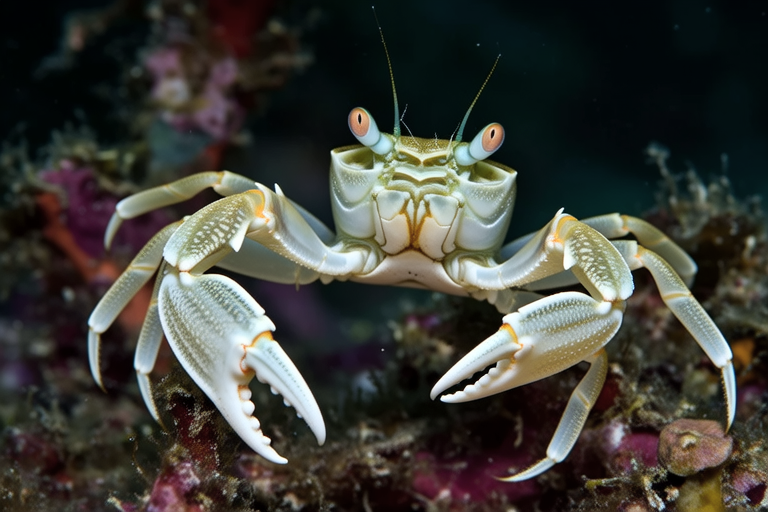
This Microscopic Crab Is a Master of Disguise—And It’s Everywhere
Imagine a creature so small it could fit on the tip of your finger—smaller than a grain of rice—and yet, it’s one of nature’s most cunning survivors. This is not a myth or a sci-fi fantasy. It’s real. And it’s everywhere you look—on rocks in tidal pools, tucked beneath leaves in forest streams, even in quiet freshwater creeks far from the ocean. Meet the *Ozius* crab, a microscopic marvel that has mastered the art of disguise like no other animal on Earth.
Though it may seem like an obscure curiosity, this tiny crustacean is quietly shaping ecosystems across continents. With its ability to blend into surroundings so perfectly that predators often walk right past it, *Ozius* isn’t just surviving—it’s thriving. In fact, scientists now believe this unassuming little crab might be one of the most widespread animals on the planet, hidden in plain sight.
### A Name That Hides a Giant
The scientific name *Ozius* comes from the Greek word “ozein,” meaning “to smell”—a nod to early taxonomists who thought these crabs had a distinctive odor. But today, we know better. The true wonder of *Ozius* lies not in its scent, but in its stealth. These crabs are typically less than half a centimeter long—so small that they’re easily overlooked by the human eye. Yet their impact is anything but small.
What makes *Ozius* so special is its uncanny ability to mimic its environment. Some individuals appear to be nothing more than a patch of moss or a clump of algae. Others resemble bits of driftwood, pebbles, or even decaying plant matter. To a predator scanning for prey, *Ozius* looks like background noise—a dead piece of the landscape, not a living, breathing animal.
### Wherever There’s Water, There’s *Ozius*
Despite their size, *Ozius* crabs are global citizens. Found in tide pools along rocky coasts from California to Japan, in freshwater streams across Europe and South America, and even in damp forest soils near rivers in Southeast Asia, these crabs have adapted to an astonishing variety of habitats. They thrive wherever there’s moisture, shelter, and organic debris—essentially, anywhere life can cling to a damp corner.
In tropical regions, they scuttle through leaf litter beneath dense rainforest canopies. In temperate zones, they hide under stones in cold mountain brooks. Even in urban parks with neglected garden ponds, researchers have spotted them clinging to submerged roots and debris. Their adaptability is staggering: they tolerate fluctuating temperatures, varying salinity levels, and periods of drought by entering a state of suspended animation—literally pausing their metabolism until conditions improve.
This wide distribution isn’t accidental. Scientists believe *Ozius* crabs likely hitch rides on birds’ feathers, in the mud on shoes, or even inside the bodies of other animals. Tiny eggs or juvenile stages can survive dry conditions for weeks, allowing them to travel vast distances without ever touching water. Once dropped into a new habitat, they emerge ready to colonize.
### The Art of Illusion: Nature’s Ultimate Camouflage
At first glance, *Ozius* appears almost indistinguishable from its surroundings. But look closer—really close—and you’ll see the magic unfold. These crabs don’t just live among algae; they actively collect and attach fragments of it to their shells. Using specialized claws and sticky secretions, they weave strands of green and brown filaments into their exoskeletons, creating a living cloak of vegetation.
Some specimens go further: they gather bits of sand, shell fragments, or even insect remains and glue them onto their backs. One study using high-resolution imaging revealed that certain *Ozius* individuals carried up to 20 different types of debris, each carefully chosen to match their immediate environment. It’s as if they’re dressing themselves for camouflage—like a tiny, mobile work of art.
But the trick doesn’t stop there. Researchers have observed that *Ozius* can change their appearance over time. If moved from a sandy shore to a rock covered in lichen, the crab will begin collecting lichen fragments within days. This behavioral plasticity—the ability to adjust tactics based on surroundings—is rare among such small organisms and speaks to a sophisticated survival strategy.
Predators, including small fish, amphibians, and predatory insects, struggle to detect them. Experiments conducted in controlled lab settings showed that only 37% of visual predators could identify a *Ozius* crab when it was perfectly camouflaged. When the crab was removed from its disguise and placed on a neutral surface, detection rates jumped to over 90%. Clearly, invisibility is not just luck—it’s a calculated performance.
### Feeding on the Fringe: Diet and Daily Life
Despite their elusive nature, *Ozius* crabs are voracious feeders. They’re omnivores, scavenging on detritus—decaying plant material, microorganisms, and tiny invertebrates. They use their delicate front claws to pluck particles from surfaces, much like miniature vacuum cleaners. Some studies suggest they also consume fungal spores and bacteria, playing a vital role in nutrient recycling.
Their feeding habits are particularly important in ecosystems where decomposition is slow. By breaking down organic matter, *Ozius* helps release nutrients back into the soil and water, supporting everything from algae to larger aquatic species. In stream environments, their presence correlates with higher microbial activity and improved water quality.
Interestingly, *Ozius* crabs are social in ways that surprise scientists. While generally solitary, they’ve been observed gathering in clusters during molting seasons—when shedding their hard shells, they become vulnerable. Grouping together may offer protection from predators, reducing individual risk. This behavior hints at complex social dynamics hidden beneath their silent, camouflaged exteriors.
### Science Unveils Hidden Secrets
Recent advances in microscopy and genetic analysis have shed new light on *Ozius*. A groundbreaking 2023 study published in *Nature Ecology & Evolution* used DNA barcoding to trace the genetic lineage of thousands of *Ozius* samples collected worldwide. The results were astonishing: despite their physical differences in color and shape, nearly all individuals shared remarkably similar genomes—suggesting a single, highly adaptable species with extreme phenotypic variation.
This discovery suggests that *Ozius* doesn’t rely on multiple distinct species to survive across diverse habitats. Instead, a single species uses environmental cues to morph its appearance—what scientists call “phenotypic plasticity.” It’s like having a universal toolkit for survival, where the same organism can dress up as a rock, a leaf, or a piece of bark depending on where it lands.
Another fascinating finding involves the crab’s sensory system. Unlike many crustaceans, *Ozius* lacks large eyes. Instead, it relies on sensitive hairs and antennae to detect vibrations and chemical signals in the water. This allows it to “feel” its way through dark crevices and avoid danger without needing to see. It’s a reminder that perception isn’t always about vision—it’s about awareness.
### An Unsung Ecosystem Engineer
While *Ozius* never graces children’s books or wildlife documentaries, its ecological importance cannot be overstated. In forested headwater streams, for example, these crabs help maintain balance by consuming fine particulate matter that would otherwise clog the ecosystem. In coastal zones, they contribute to the breakdown of algal blooms, preventing oxygen depletion in the water.
They also serve as a food source for larger animals—though rarely consumed due to their camouflage. When predators do catch one, it’s often because the crab made a mistake—perhaps moving too quickly or losing part of its disguise. But most of the time, *Ozius* slips through unnoticed.
Moreover, their presence can indicate environmental health. Because they’re sensitive to pollution and changes in water chemistry, their abundance or absence can signal shifts in ecosystem stability. Conservationists are beginning to monitor *Ozius* populations as bioindicators, much like frogs or mayflies.
### A Lesson in Stealth and Survival
In a world obsessed with visibility—where fame, influence, and attention are prized—*Ozius* offers a radical alternative: success through invisibility. It reminds us that strength isn’t always loud or flashy. Sometimes, it’s quiet. Subtle. Hidden.
This tiny crab teaches us that adaptation isn’t about fighting change—it’s about becoming part of it. By blending in, *Ozius* avoids conflict, conserves energy, and thrives in places others can’t. Its survival isn’t dependent on speed or strength, but on intelligence, flexibility, and patience.
It challenges our assumptions about what it means to be powerful. In nature, being seen isn’t always an advantage. Sometimes, the greatest power lies in remaining unseen.
### A World Full of Hidden Wonders
Next time you’re walking along a rocky shore or peering into a forest stream, pause. Look closely—not at the big things, but at the small ones. Beneath a stone, tucked in a crevice, maybe even clinging to a leaf—there might be a *Ozius* crab, disguised as a speck of moss, waiting silently.
It’s easy to overlook such creatures. They’re small, quiet, and often invisible. But their existence is a testament to the incredible ingenuity of evolution. From the tiniest scale to the grandest ecosystems, life finds a way—not through force, but through finesse.
*Ozius* may be microscopic, but its story is enormous. It’s a reminder that wonder isn’t always found in spectacle. Sometimes, it’s hiding in plain sight—just waiting for someone to look closely enough to see it.
So the next time you feel invisible in a crowded world, remember: there’s a crab out there, smaller than a grain of sand, mastering the art of disguise, surviving against all odds, and doing it all without ever being noticed.
And perhaps, in that quiet resilience, we can find inspiration.
