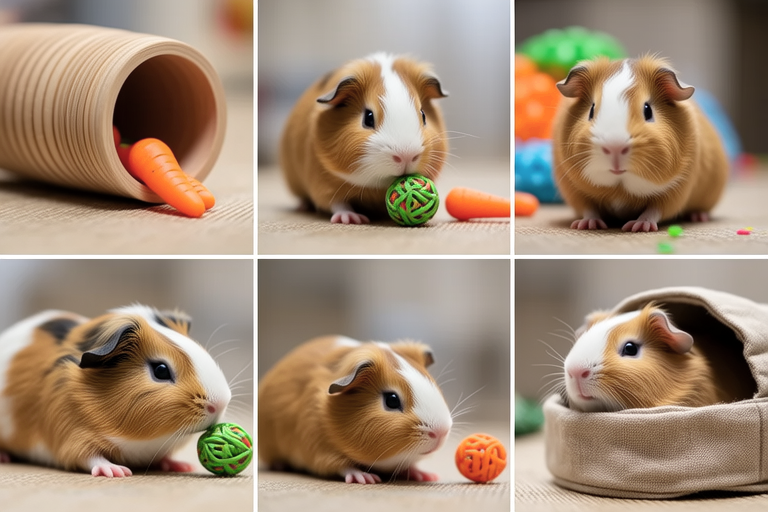
Top 10 DIY Toys for Keeping Your Guinea Pig Busy and Happy
Guinea pigs are social, active creatures that require ample stimulation to maintain their physical and mental well-being. Providing your guinea pig with a variety of toys not only keeps them entertained but also helps prevent boredom, obesity, and other behavioral issues. In this article, we will explore ten DIY toys that you can easily create at home to keep your guinea pig busy and happy.
1. Cardboard Fort
Materials Needed: Large cardboard boxes, scissors or box cutter, tape, and a marker.
Instructions: Start by cutting out different shapes from large cardboard boxes. Use scissors or a box cutter to cut out windows, doors, and tunnels. Secure the pieces together using tape. You can also decorate the fort with markers to make it more visually appealing. Make sure all edges are smooth to avoid injuries.
Benefits: This fort provides a safe environment for your guinea pig to explore, play, and hide. It stimulates their curiosity and helps them exercise.
2. Paper Tube Maze
Materials Needed: Toilet paper or paper towel rolls, glue, scissors, and paint (optional).
Instructions: Cut the paper rolls into various lengths. Glue them together to form a maze. You can secure the connections with additional glue or tape. If desired, paint the maze for added visual interest. Once dry, place the maze in your guinea pig’s habitat.
Benefits: The maze encourages problem-solving skills and provides a fun way for your guinea pig to navigate through different paths.
3. Hay Fort
Materials Needed: Hay, twine or string, and a small piece of cardboard or wood.
Instructions: Tie the hay into bundles using twine or string. Attach the bundles to a small piece of cardboard or wood to create a fort-like structure. Place the hay fort in your guinea pig’s enclosure.
Benefits: This fort allows your guinea pig to shred and rearrange the hay, promoting natural behaviors and providing mental stimulation.
4. PVC Pipe Tunnel
Materials Needed: PVC pipes (various diameters), pipe connectors, and sandpaper.
Instructions: Sand the ends of the PVC pipes to remove any rough edges. Connect the pipes using appropriate connectors to form a tunnel system. Ensure the joints are secure and the tunnel is stable.
Benefits: The tunnel provides a safe space for your guinea pig to run through, encouraging exercise and exploration.
5. Puzzle Feeder
Materials Needed: Plastic container, holesaw, drill, and treats.
Instructions: Drill small holes in the plastic container using a holesaw. Fill the container with treats and place it in your guinea pig’s habitat. The size of the holes should be just large enough for the treats to fall out as your guinea pig nudges the container.
Benefits: This puzzle feeder promotes foraging behavior and provides mental stimulation while rewarding your guinea pig with tasty treats.
6. Ladder Run
Materials Needed: Wooden planks or cardboard, glue, and screws.
Instructions: Cut the wooden planks or cardboard into strips of equal width. Glue or screw the strips together to form a ladder. Ensure the spacing between the rungs is appropriate for your guinea pig’s size. Attach the ladder to the side of your guinea pig’s habitat.
Benefits: The ladder run provides a climbing structure that exercises your guinea pig’s muscles and satisfies their need for vertical exploration.
7. Tire Swing
Materials Needed: Small tire, rope, and a sturdy hook.
Instructions: Attach one end of the rope to the center of the tire using strong knots or metal clips. Hang the tire from a sturdy hook in your guinea pig’s habitat. Ensure the tire swing is securely fastened and within reach of your guinea pig.
Benefits: The tire swing offers a fun way for your guinea pig to exercise and enjoy some gentle swinging motion.
8. Ball Maze
Materials Needed: Plastic ball, cardboard, and scissors.
Instructions: Cut out various shapes from cardboard to form a maze. Arrange the pieces inside a large box to create a pathway for the ball. Place the ball in the maze and let your guinea pig push it around.
Benefits: The ball maze encourages problem-solving skills and provides a fun way for your guinea pig to interact with objects.
9. Rope Ladder
Materials Needed: Strong rope, wooden dowels, and a staple gun.
Instructions: Cut the rope into lengths suitable for the rungs of the ladder. Attach one end of each rope to a wooden dowel using a staple gun. Repeat the process with another dowel for the opposite end. Space the rungs appropriately for your guinea pig’s size. Attach the ladder to the side of your guinea pig’s habitat.
Benefits: The rope ladder provides a climbing structure that exercises your guinea pig’s muscles and satisfies their need for vertical exploration.
10. Tunnel System
Materials Needed: Large cardboard tubes, tape, and scissors.
Instructions: Cut the cardboard tubes into different lengths. Connect the tubes using tape to form a tunnel system. Ensure the connections are secure and the tunnels are stable.
Benefits: The tunnel system provides a safe space for your guinea pig to explore and hide, stimulating their curiosity and promoting exercise.
Tips on Toy Safety and Maintenance
When creating DIY toys for your guinea pig, always prioritize safety. Use non-toxic materials and ensure all edges are smooth to prevent injuries. Regularly inspect the toys for wear and tear, and replace any damaged items immediately. Clean the toys regularly to maintain hygiene and prevent the spread of bacteria. Rotate the toys periodically to keep your guinea pig interested and engaged.
