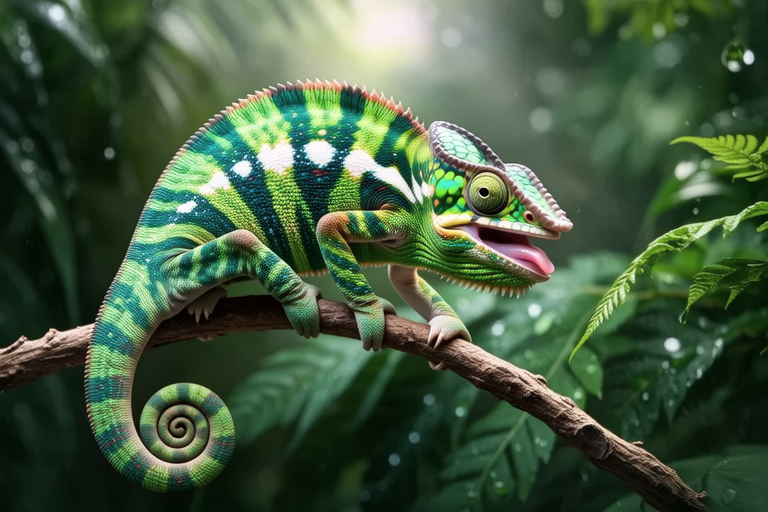
Top 7 Surprising Facts About Chameleons That Will Amaze You
Welcome to a world where nature’s creativity knows no bounds! Chameleons, those enchanting reptiles, have captured the imagination of people for centuries with their extraordinary abilities. Beyond their well-known talent for changing colors, these animals have a myriad of fascinating traits that might just leave you astonished. Let’s dive into the top seven surprising facts about chameleons that will amaze you.
1. The Eyes of a Chameleon: Independent and Powerful
One of the most remarkable features of chameleons is their eyes. Unlike humans and many other animals, chameleons can move each eye independently of the other. This adaptation allows them to look in two different directions simultaneously, which is incredibly useful when hunting prey or scanning for potential threats. Each eye can rotate almost 180 degrees, giving chameleons nearly a 360-degree field of vision. Imagine having the ability to see what’s behind you without turning your head!
When a chameleon spots its next meal, it uses both eyes together to focus on the target, providing depth perception necessary for precise strikes. This unique eye movement helps them catch insects with remarkable accuracy, often without even moving their bodies. It’s like having built-in binoculars, but better!
2. Tongue Power: Faster Than the Blink of an Eye
The chameleon’s tongue is one of the most amazing tools in the animal kingdom. Did you know that a chameleon’s tongue can be twice as long as its body? When they strike at their prey, the tongue moves faster than the blink of an eye—reaching speeds of up to 26 body lengths per second. This incredible speed is due to a specialized muscle system that loads energy like a stretched rubber band and releases it all at once.
What’s even more impressive is the sticky tip of the tongue. It’s covered in a special adhesive that helps secure the prey during the lightning-fast strike. Once the prey is caught, the chameleon retracts its tongue back into its mouth, ready for the next hunt. This quick and efficient method of catching food ensures that chameleons don’t miss out on meals, even if they’re only small insects.
3. Color-Changing Abilities: More Than Just Camouflage
We’ve all heard about chameleons changing colors to blend into their surroundings, but did you know that this isn’t always for camouflage? While chameleons do change color to match their environment, they also use this ability for communication. By altering their hues, chameleons can signal their mood, health status, or readiness to mate.
The process of color change involves specialized cells called chromatophores, which contain different pigments. These cells expand or contract based on neural signals from the brain, allowing the chameleon to display various shades. For instance, a relaxed chameleon might appear calm and green, while a stressed or excited chameleon could show bright red or yellow tones. This colorful communication helps chameleons interact effectively within their social groups.
4. Feet Designed for Grip: Sticking to Trees
Chameleons are known for their exceptional climbing abilities, thanks to their unique feet. Their feet are divided into two groups of toes, with three toes pointing forward and two pointing backward. This arrangement provides a strong grip on branches and tree trunks, making it easy for chameleons to navigate through their arboreal habitats.
But there’s more to their feet than just grip. The skin between the toes has a rough texture, further enhancing their ability to hold onto surfaces. This design is particularly useful in environments where food sources are found high up in trees. With such versatile feet, chameleons can explore areas that many other animals cannot reach, giving them a competitive edge in finding food.
5. Longevity in Captivity: A Lifespan of Up to 10 Years
Many people assume that chameleons don’t live very long, especially in captivity. However, with proper care, some species can live for up to ten years. Factors like diet, habitat, and overall health play significant roles in determining how long a chameleon can live.
In the wild, chameleons face numerous challenges, including predators and environmental changes, which can shorten their lifespan. In contrast, captive chameleons benefit from controlled environments that provide optimal living conditions. By ensuring that your pet chameleon has access to a balanced diet, appropriate lighting, and suitable temperature ranges, you can help extend its life expectancy. Proper care not only increases longevity but also enhances the quality of life for these fascinating creatures.
6. Unique Reproduction Methods: Oviparous and Viviparous Species
Chameleons exhibit a variety of reproductive strategies depending on the species. Some chameleons lay eggs (oviparous), while others give birth to live young (viviparous). The viviparous species, such as the Jackson’s chameleon, develop their embryos internally before giving birth. This adaptation provides extra protection for the developing offspring, increasing their chances of survival.
Oviparous species, on the other hand, lay eggs that incubate in nests or burrows until they hatch. The female chameleon typically lays her eggs in a safe location and then leaves them to develop on their own. After hatching, the baby chameleons are fully independent and must fend for themselves right away. Both methods have evolved to ensure the survival of the species in diverse environments.
7. Tail Adaptations: More Than Just Balance
While many people think of a chameleon’s tail as simply a balancing tool, it serves multiple purposes. The prehensile tail is highly flexible and can wrap around branches, helping the chameleon anchor itself while climbing or resting. This feature is particularly beneficial in windy conditions, where it helps prevent the chameleon from falling.
Additionally, the tail acts as a fifth limb, assisting in locomotion and providing additional support when the chameleon needs to stretch or reach for distant objects. Some species even use their tails to defend themselves by lashing out at predators. The tail’s versatility makes it an essential part of the chameleon’s anatomy, contributing significantly to its survival in the wild.
Call to Action
Chameleons are truly remarkable creatures with a wealth of fascinating traits waiting to be discovered. Whether you’re captivated by their powerful tongues, colorful communication, or unique feet, there’s always more to learn about these enigmatic reptiles. If you’re interested in learning more about chameleons, consider visiting local zoos, watching documentaries, or reading books written by experts in herpetology. By expanding your knowledge, you’ll gain a deeper appreciation for these incredible animals and their vital role in our ecosystems.
