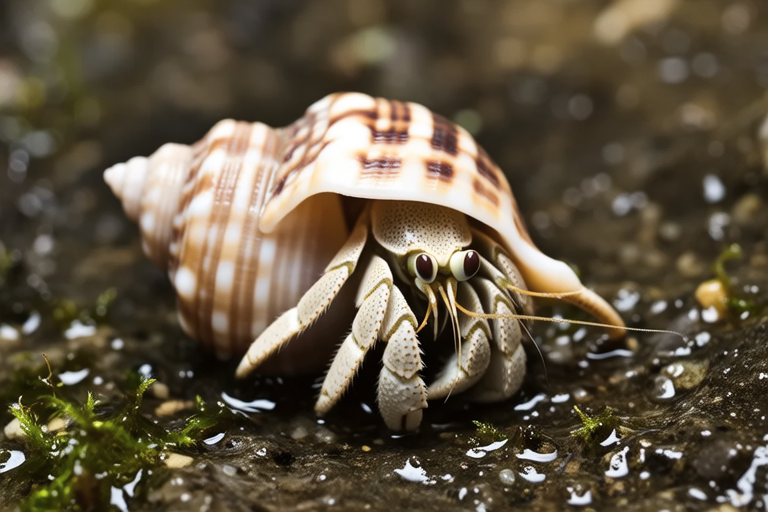
The Hidden Life of Hermit Crabs
Hermit crabs are fascinating creatures with a unique lifestyle that sets them apart from other crustaceans. While many people are familiar with their scuttling movements on sandy beaches, these little creatures have an intriguing set of behaviors and daily routines that remain largely unnoticed by the casual observer. From their shell-changing habits to their nocturnal activities and interactions within their communities, there’s much more to hermit crabs than meets the eye.
Shell-Changing Habits
One of the most distinctive features of hermit crabs is their reliance on shells for protection. As hermit crabs grow, they outgrow their current shells and must find new ones to inhabit. This process, known as shell changing, is crucial for their survival and can be both a solitary and communal activity. When a hermit crab is ready to change its shell, it often scouts around for a suitable replacement. Sometimes, this involves a bit of negotiation with other crabs who may already be occupying desirable shells. Hermit crabs will sometimes fight over larger or more attractive shells, demonstrating a surprising level of aggression for such small creatures.
Interestingly, hermit crabs also have a unique method of testing the suitability of a new shell. They carefully inspect the shell’s interior, ensuring it provides adequate space and protection. Once satisfied, they move in, discarding their old shell entirely. This behavior underscores the importance of finding the right fit for their growing bodies.
Eating Patterns
Hermit crabs are omnivorous, feeding on a variety of foods including algae, dead animals, and plant matter. Their eating habits are quite varied, depending on what’s available in their environment. During the day, hermit crabs are generally more active, which means they spend more time scavenging for food. However, they are also opportunistic feeders, meaning they will eat whenever food is available, regardless of the time of day.
Hermit crabs typically eat in short bursts, consuming small amounts at a time. They use their front claws to tear apart food, while their mouthparts help them grind and consume the morsels. This method ensures they make the most efficient use of their energy, especially when food sources are scarce.
Resting Positions
When not actively searching for food or engaging in social activities, hermit crabs retreat into their shells for rest. Their resting positions can vary, but they often tuck themselves snugly inside, leaving only their antennae and eyestalks exposed. This posture allows them to remain alert to potential threats while conserving energy. Inside their shells, hermit crabs can also adjust the position of their legs to ensure comfort and stability. Some species even have specialized appendages called “grooming claws” that help them clean and maintain their shells, keeping them free from debris and potential predators.
Nocturnal Activities
Many hermit crabs are primarily nocturnal, meaning they are most active during the night. This behavior helps them avoid predators and take advantage of cooler temperatures. Nocturnal hermit crabs often engage in more extensive foraging during the night, moving further distances to search for food. They also tend to be more social during these hours, interacting with other hermit crabs in ways that are less common during the day.
During the night, hermit crabs may also participate in communal activities like shell sharing or group defense against predators. These behaviors highlight the complex social structures that exist within hermit crab communities, even if they are not always visible to human observers.
Communication Methods
Despite their small size, hermit crabs have developed several methods of communication. One of the most notable is through chemical signals. Hermit crabs release pheromones, which can convey information about their presence, readiness to mate, or even warnings of danger. These chemical signals play a crucial role in coordinating group activities, such as shell sharing or avoiding predators.
In addition to chemical signals, hermit crabs also use touch and sound to communicate. For example, they may tap on the shells of other crabs to establish dominance or signal readiness for a shell exchange. While their auditory communication is limited, the tapping sounds can travel through water and sand, helping hermit crabs locate each other even in crowded environments.
Survival Strategies During Inactive Periods
Hermit crabs have several unique survival strategies that they employ during periods of inactivity. One of the most important is their ability to conserve water. Since hermit crabs live in humid environments, they need to retain moisture to survive. To achieve this, they secrete a mucous layer over their soft abdomens, which helps prevent dehydration. Additionally, they often seek out damp areas within their shells, where they can rest comfortably without losing too much moisture.
Another key strategy is their ability to enter a state of dormancy. When environmental conditions become unfavorable, hermit crabs can slow down their metabolism and reduce their activity levels. This allows them to survive in harsh conditions until better times arrive. During dormancy, hermit crabs will retreat deeper into their shells, minimizing their exposure to external threats.
Unique Physiological Features
Hermit crabs possess several physiological features that contribute to their unique lifestyle. Perhaps the most notable is their asymmetrical body shape. Unlike many other crustaceans, hermit crabs have one claw that is significantly larger than the other. The larger claw, known as the crusher claw, is used for defense and breaking open hard-shelled prey. The smaller claw, or cheliped, is used for picking up food and grooming.
Hermit crabs also have a specialized gill structure that allows them to breathe both in and out of water. While they require water to breathe efficiently, they can also absorb oxygen from the air through their gills, enabling them to survive brief periods on land. This adaptability is particularly useful for hermit crabs living in intertidal zones, where they must navigate between wet and dry environments.
Another interesting feature is their ability to regenerate lost limbs. If a hermit crab loses a leg or claw, it can regrow the appendage over time. This regenerative capability is vital for survival, as it allows hermit crabs to recover from injuries sustained during fights or encounters with predators.
Community Interactions
Hermit crabs are surprisingly social creatures, forming complex communities within their habitats. These communities can range from small groups of a few dozen crabs to large aggregations numbering in the thousands. Within these communities, hermit crabs engage in various cooperative behaviors, including shell sharing and group defense.
Shell sharing is a behavior where multiple hermit crabs occupy a single shell. This arrangement allows smaller crabs to benefit from the protection offered by a larger shell, while the larger crab can benefit from the company and assistance of its smaller companions. Group defense, on the other hand, involves hermit crabs working together to fend off predators or competitors. By banding together, hermit crabs can present a united front, making it more difficult for predators to target individual members of the group.
Hermit crabs also exhibit a form of mutualism with certain species of sea anemones. These anemones attach themselves to the shells of hermit crabs, providing additional protection from predators. In return, the anemones benefit from the mobility provided by the hermit crab, allowing them to access a wider range of food sources.
Conclusion
The hidden behaviors and daily routines of hermit crabs reveal a world of complexity and adaptability. From their shell-changing habits to their nocturnal activities and intricate social interactions, hermit crabs have developed a remarkable set of strategies to thrive in their unique environments. Understanding these behaviors not only deepens our appreciation for these fascinating creatures but also highlights the importance of conservation efforts to protect their habitats. Whether exploring the mysteries of their physiology or marveling at their community dynamics, there’s always something new to discover about hermit crabs.
