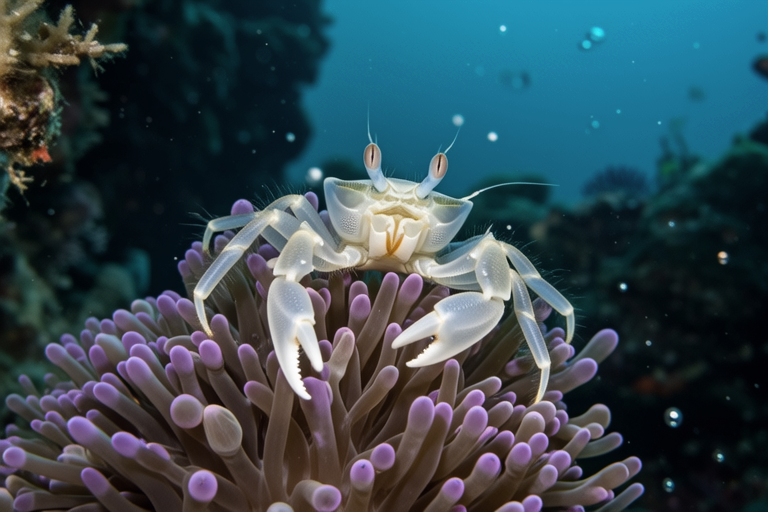
Pea Crabs: Nature’s Hidden Hitchhikers Inside Sea Anemones
In the vast and mysterious world of marine life, one of the most fascinating relationships exists between pea crabs and sea anemones. These tiny crustaceans have evolved a unique way of living, hidden within the tentacles of their host, safe from predators and enjoying a protected environment. This article delves into the intricate details of this symbiotic relationship, exploring the species diversity, size, mating habits, and evolutionary history of pea crabs. Additionally, it will address the threats to their habitat and ongoing conservation efforts.
The Symbiotic Relationship
Pea crabs, scientifically known as Pinnotheridae, are small, soft-bodied crabs that reside within the oral disc of sea anemones. Their existence is a testament to nature’s ingenuity, as they find refuge within the protective tentacles of their host, which act as a fortress against potential threats. The sea anemone’s stinging cells, or nematocysts, provide a formidable defense mechanism, ensuring the safety of both the anemone and its resident crab.
While the pea crab enjoys protection, it also plays a crucial role in the anemone’s survival. As the crab scavenges for food, it inadvertently brings nutrients back to the anemone. These nutrients, often in the form of organic matter and detritus, enrich the water around the anemone, promoting its growth and overall health. This mutualistic relationship benefits both parties, highlighting the delicate balance that exists within marine ecosystems.
Species Diversity and Size
The family Pinnotheridae encompasses a wide variety of species, each adapted to its specific environment. While some pea crabs prefer the shelter of sea anemones, others have chosen other hosts such as barnacles, sponges, and even hermit crabs. This adaptability showcases the remarkable versatility of these tiny creatures, allowing them to thrive in diverse aquatic habitats.
Pea crabs are notably small, typically measuring between 5 and 25 millimeters in length. Their diminutive size is essential for their survival, enabling them to fit comfortably within the confines of their host’s oral disc. Despite their small stature, these crabs possess a surprising array of features that aid in their survival, including specialized appendages designed for grasping and navigating through their aquatic environment.
Mating Habits
The reproductive cycle of pea crabs is a complex process, involving a series of behaviors that ensure the continuation of their species. Unlike many other crustaceans, pea crabs exhibit a high degree of sexual dimorphism, with males being significantly smaller than females. This difference in size is advantageous during mating, as the male crab can easily attach itself to the female, ensuring successful fertilization.
During the mating season, male pea crabs actively seek out females by following chemical signals released into the water. Once a pair has formed, the male remains attached to the female for extended periods, sometimes for months at a time. This prolonged attachment increases the chances of successful reproduction, as the male can immediately fertilize the eggs as they are released by the female.
The female pea crab carries her eggs in a brood pouch located under her body. After several weeks, the eggs hatch, releasing tiny larvae into the surrounding water. These larvae drift with ocean currents, eventually settling on a suitable host where they will mature into adult pea crabs. This method of reproduction ensures genetic diversity and the continued spread of the species across various marine environments.
Evolutionary History
The evolution of pea crabs and their symbiotic relationship with sea anemones is a story of adaptation and survival. Over millions of years, these crabs have developed unique physical and behavioral traits that allow them to coexist with their hosts. The earliest evidence of pea crabs dates back to the late Cretaceous period, approximately 66 million years ago, suggesting that this relationship has existed for a considerable amount of time.
Through natural selection, pea crabs have evolved to be perfectly suited for their niche within the marine ecosystem. Their small size, ability to withstand the anemone’s stinging cells, and efficient feeding mechanisms all contribute to their success. The relationship between pea crabs and sea anemones represents a prime example of how organisms can evolve to fill specific roles within their environment, creating mutually beneficial partnerships that enhance the resilience of entire ecosystems.
Threats to Habitat and Conservation Efforts
Despite their adaptability, pea crabs and their sea anemone hosts face numerous threats to their survival. One of the primary concerns is habitat destruction caused by human activities such as coastal development, pollution, and climate change. These factors can lead to the degradation of marine ecosystems, reducing the availability of suitable hosts for pea crabs and disrupting the delicate balance of their symbiotic relationship.
To address these challenges, various conservation efforts are underway. Marine protected areas (MPAs) have been established in key locations to safeguard critical habitats and promote biodiversity. These protected zones restrict harmful activities such as fishing and development, allowing marine ecosystems to recover and thrive. Additionally, public awareness campaigns and educational initiatives aim to inform communities about the importance of preserving marine life and the interconnectedness of different species.
Research institutions and governmental bodies are also working together to develop strategies for monitoring and managing marine ecosystems. By collecting data on population trends, habitat conditions, and environmental changes, scientists can identify potential threats and implement targeted interventions. Collaboration between stakeholders is crucial for the long-term preservation of pea crabs and their symbiotic partners, ensuring the continued health of marine environments.
Conclusion
The relationship between pea crabs and sea anemones is a remarkable example of the complexity and beauty found within marine ecosystems. Through their unique symbiotic partnership, these tiny crustaceans have carved out a niche that provides them with protection and sustenance, while simultaneously benefiting their hosts. Understanding the intricacies of this relationship not only deepens our appreciation for the wonders of nature but also underscores the importance of preserving marine habitats for future generations.
By recognizing the vital role played by pea crabs and their hosts, we can work towards protecting these delicate ecosystems and ensuring the continued existence of this fascinating relationship. As stewards of the planet, it is our responsibility to safeguard the rich biodiversity that thrives beneath the waves, fostering a sustainable future for all marine life.
