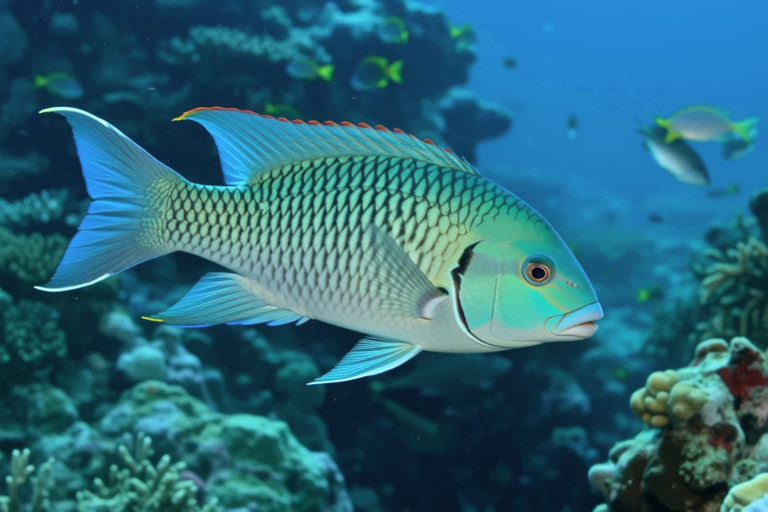
Parrot Fish: The Colorful Guardians of Coral Reefs Explained
Introduction:
Imagine a world where the ocean’s vibrant hues come alive through the dazzling display of colorful creatures. Among these is the parrot fish, a species that not only dazzles with its vibrant palette but also plays a crucial role in maintaining the health of coral reefs. These fascinating fish, named for their beak-like mouths, are vital to the ecological balance of marine environments. This article delves into the world of parrot fish, exploring their unique characteristics, behaviors, and the challenges they face.
The Parrot Fish Species
There are over 90 recognized species of parrot fish, each displaying a stunning array of colors. From electric blues and greens to fiery reds and oranges, these fish are nature’s living art pieces. Their bodies are often adorned with intricate patterns, making them a favorite among divers and underwater photographers.
Vibrant Colors and Ecological Role
Their vibrant colors serve more than aesthetic purposes; they play a significant role in communication within the species. Males, in particular, exhibit striking hues during mating season to attract females. However, beyond their visual allure, parrot fish are essential to the survival of coral reefs.
Feeding Habits and Coral Growth
Parrot fish are herbivores, primarily feeding on algae that grow on coral reefs. They possess strong teeth arranged in a beak-like structure, allowing them to scrape algae off coral surfaces. This process, known as bioerosion, is vital for coral growth. By removing algae, parrot fish prevent overgrowth, which can otherwise smother corals and hinder their ability to photosynthesize.
Moreover, parrot fish contribute to the formation of sand. As they consume algae, they digest coral skeletons, excreting fine particles that eventually become part of the sandy beaches we enjoy. This process is essential for maintaining the structural integrity of coral reefs.
Anatomy and Behavior
Parrot fish have robust bodies covered in thick scales that protect them from predators. Their eyes are large and positioned on the sides of their heads, providing a wide field of vision. This adaptation helps them detect approaching threats while feeding.
Behaviorally, parrot fish are social creatures, often found in groups. They communicate through a series of grunts and chirps, produced by grinding their pharyngeal teeth together. These sounds are thought to help maintain group cohesion and ward off potential threats.
Reproduction
Parrot fish reproduce through a process known as broadcast spawning. During this event, males release sperm into the water column, while females simultaneously release eggs. The fertilized eggs float freely in the water until they hatch, producing tiny larvae. These larvae drift with ocean currents before settling on suitable reef habitats.
Challenges Faced by Parrot Fish
Despite their importance, parrot fish populations are under threat due to various factors. Overfishing poses a significant risk, as many species are highly sought after for their meat. Additionally, habitat destruction caused by climate change, pollution, and coastal development further exacerbates the problem.
Coral bleaching events, triggered by rising sea temperatures, have devastating effects on parrot fish populations. When corals bleach, they expel the symbiotic algae living in their tissues, turning white. Without these algae, corals struggle to survive, leading to a decline in available food sources for parrot fish.
The Importance of Conservation
Conserving parrot fish is crucial for the health of coral reefs and the broader marine ecosystem. Protecting these fish ensures the continuation of their vital roles in maintaining reef health and supporting biodiversity. Efforts to conserve parrot fish include establishing marine protected areas, promoting sustainable fishing practices, and raising awareness about the importance of these species.
In conclusion, parrot fish are more than just colorful inhabitants of coral reefs. They are indispensable guardians, playing a critical role in the health and longevity of these vital ecosystems. By understanding and appreciating the significance of parrot fish, we can work towards ensuring their survival and the preservation of our oceans’ natural beauty.
