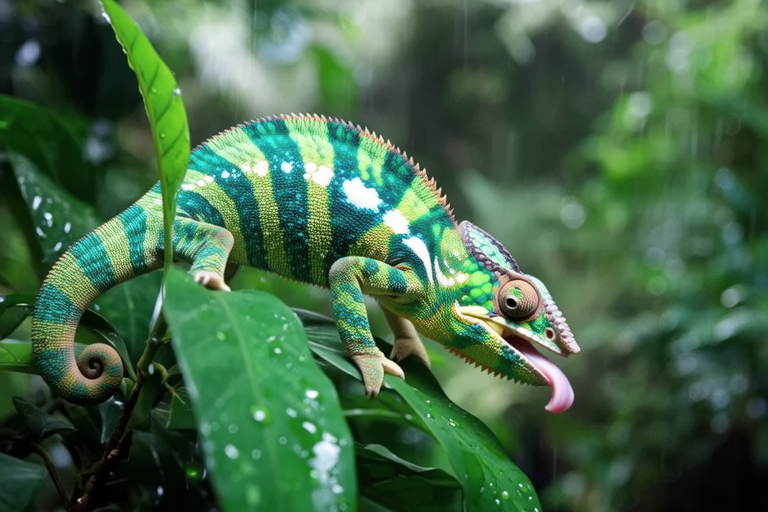
The Colorful Life of Chameleons: Understanding Their Unique Behavior Patterns
Chameleons are among the most fascinating creatures in the animal kingdom, known for their ability to change colors. These lizards are found in diverse habitats across Africa, Madagascar, southern Europe, and Asia. They are predominantly arboreal, meaning they spend most of their lives in trees, where they thrive due to their unique physical adaptations and behavior patterns. This article delves into the world of chameleons, exploring their habitat, dispelling common myths about their color-changing abilities, and explaining the true purposes behind these transformations. Additionally, it examines their physical characteristics, social behaviors, and provides tips for those interested in keeping them as pets.
Habitat and Distribution
Chameleons inhabit a wide range of environments, from rainforests to deserts. The majority of species live in sub-Saharan Africa, with Madagascar being home to over half of the known species. Some species have adapted to live in drier regions, while others prefer lush, tropical forests. Their preferred habitats offer ample opportunities for basking, hiding, and hunting, which are essential for their survival. Chameleons are highly territorial and solitary animals, rarely interacting with others except during mating season. Their arboreal lifestyle has led to the development of specialized features that help them navigate their environment efficiently.
Dispelling Myths About Color-Changing Abilities
One of the most widespread misconceptions about chameleons is that they can change color to blend into any background. While chameleons are indeed masters of color change, their primary reason for doing so is not camouflage but rather communication and temperature regulation. Another myth is that they change color based solely on their mood, like humans changing facial expressions. In reality, color changes are complex processes involving multiple factors such as stress, temperature, light conditions, and social interactions.
The True Purpose Behind Color Changes
Chameleons change color through specialized cells called chromatophores, which contain pigments and reflect light. By expanding or contracting these cells, chameleons can display a wide range of colors and patterns. The primary purposes of these color changes include:
- Communication: Chameleons use color changes to communicate with other members of their species. Males may display vibrant colors to attract females or intimidate rivals. Females also use color changes to signal their readiness to mate or their rejection of a male’s advances.
- Temperature Regulation: Chameleons are ectothermic, meaning they rely on external sources of heat to regulate their body temperature. By changing their color, they can absorb more or less sunlight, helping them maintain optimal body temperatures.
- Camouflage: While not the primary reason for color changes, chameleons can use their color-changing abilities to blend into their surroundings, providing some level of protection against predators.
Physical Characteristics and Adaptations
Chameleons possess several remarkable physical traits that enable them to thrive in their arboreal environment. One of their most notable features is their prehensile tail, which acts as a fifth limb, allowing them to grip branches securely. Their feet are divided into two opposing groups of toes, providing a strong grip on narrow surfaces. Chameleons’ eyes are another remarkable adaptation; each eye can move independently, giving them a nearly 360-degree field of vision. This allows them to spot potential threats or prey without moving their head.
Perhaps the most iconic feature of chameleons is their long, sticky tongue, which can extend up to twice the length of their body. This adaptation enables them to catch insects from a distance, ensuring a steady food supply without leaving their perch. Their flexible bodies allow them to twist and turn in tight spaces, further enhancing their ability to hunt effectively.
Social Behaviors and Mating Rituals
Despite their solitary nature, chameleons engage in complex social behaviors during mating season. Male chameleons perform elaborate displays, showcasing their brightest colors and most impressive postures to attract females. If a female is receptive, she will allow mating to occur; otherwise, she may reject the male by displaying aggressive colors and postures. After mating, the female lays eggs, which she buries in the ground for incubation. Depending on the species, the incubation period can last anywhere from three to nine months.
Chameleons exhibit territorial behavior, especially males, who will defend their territory against intruders. They may use visual displays, vocalizations, and even physical confrontations to establish dominance. However, these interactions are generally short-lived, and the animals quickly return to their solitary habits.
Interactions Within Their Environment
Chameleons play an important role in their ecosystems as both predators and prey. As insectivores, they help control populations of various arthropods, contributing to the balance of their habitats. Conversely, they serve as food for larger predators, including birds, snakes, and mammals. Their presence in an ecosystem indicates a healthy and diverse environment capable of supporting a variety of life forms.
Chameleons also contribute to seed dispersal by consuming fruits and berries. The seeds pass through their digestive system undamaged, eventually being deposited elsewhere, aiding in plant reproduction and forest regeneration.
Tips for Potential Pet Owners
For those considering chameleons as pets, it is crucial to understand that they require specialized care. Unlike many other reptiles, chameleons cannot be kept in enclosures with multiple individuals due to their territorial nature. Each chameleon requires its own spacious vivarium with proper ventilation, UVB lighting, and appropriate substrate. The enclosure should mimic their natural habitat as closely as possible, complete with live plants and branches for climbing.
Dietary requirements vary depending on the species, but most chameleons are insectivores, requiring a diet rich in crickets, mealworms, and other insects. It is essential to ensure that the insects are gut-loaded with nutritious foods before feeding them to your chameleon. Additionally, chameleons need access to fresh water at all times, preferably through misting systems or drip systems that simulate natural rainfall.
Maintaining optimal environmental conditions is critical for the health and longevity of pet chameleons. Temperature gradients should be established within the enclosure to allow the chameleon to thermoregulate effectively. Humidity levels must also be carefully managed to prevent respiratory issues. Regular veterinary check-ups are recommended to monitor the health of your pet and address any potential problems early.
In conclusion, chameleons are truly remarkable creatures with unique adaptations and behaviors. By understanding their needs and providing appropriate care, owners can enjoy the beauty and wonder of these captivating lizards as cherished companions. Whether you’re a seasoned herpetologist or a curious beginner, there’s always more to learn about the colorful life of chameleons.
