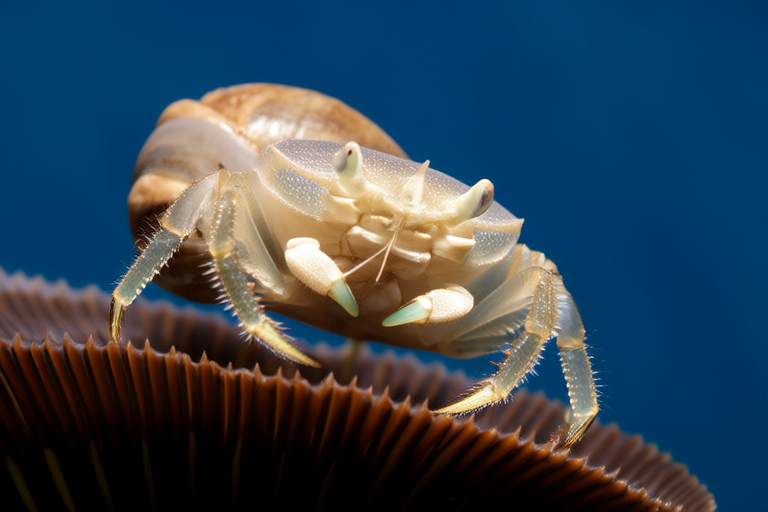
The Fascinating World of Pea Crabs
Welcome to the enchanting realm of pea crabs, a group of crustaceans that might be tiny but are incredibly significant in the marine ecosystem. These minute creatures, often no bigger than a thumbnail, have evolved to live in a unique relationship with their hosts, offering insights into the intricate balance of marine life.
Microscopic Size and Symbiotic Relationships
Pea crabs belong to the family Pinnotheridae, which comprises around 80 species. Their petite size is one of their most striking features, with adults rarely exceeding 10 millimeters in length. This diminutive stature allows them to reside comfortably within the gill chambers of their hosts, where they can avoid predators and find shelter. The crabs’ small size also makes them highly efficient at extracting nutrients from their hosts without causing significant harm.
Pea crabs are obligate commensals, meaning they cannot survive independently outside their host’s body. They establish a symbiotic relationship with various marine organisms, particularly bivalves such as clams and oysters, as well as echinoderms like sea cucumbers and starfish. Within these hosts, pea crabs find protection from larger predators and access to a constant food supply. In return, they provide some benefits to their hosts, such as cleaning out parasites or debris from the host’s tissues.
Habitat and Diet
Pea crabs inhabit coastal waters worldwide, from shallow estuaries to deeper oceanic environments. They prefer areas rich in organic matter and plankton, which serve as essential food sources for both the crabs and their hosts. The crabs are typically found in soft-bottom habitats, such as mudflats and sandy shores, where their hosts thrive. Some species have even been observed living inside deep-sea hydrothermal vents, showcasing their adaptability to diverse environments.
Their diet consists mainly of plankton, detritus, and small particles filtered by their host organisms. By feeding on these materials, pea crabs help maintain the health of their hosts by removing potentially harmful substances. Additionally, they contribute to nutrient cycling within the ecosystem by breaking down organic matter into simpler compounds that can be utilized by other organisms.
Life Cycle
The life cycle of pea crabs is closely tied to that of their hosts. After mating, female pea crabs deposit their eggs onto the gills or mantle cavity of their host, where they remain until hatching. Once hatched, larvae enter the water column and undergo several molts before settling on a suitable host. Upon finding a compatible host, the young crabs burrow into its tissues and continue growing throughout their lives.
This close association between pea crabs and their hosts ensures successful reproduction and survival for both parties involved. It also highlights the importance of maintaining healthy populations of host species for the continued existence of pea crabs.
Fascinating Facts About Coexistence
One of the most remarkable aspects of pea crab biology is how they coexist with their hosts without causing significant damage. Despite residing within the delicate structures of their hosts, pea crabs manage to avoid triggering immune responses or causing tissue damage. Scientists believe this may be due to chemical signals produced by the crabs that suppress the host’s defense mechanisms.
In addition to living inside bivalves and echinoderms, some species of pea crabs have been found inhabiting sea anemones and jellyfish. This versatility in choosing hosts underscores the adaptability of these tiny creatures and suggests that there may still be undiscovered species yet to be identified.
Recent Scientific Discoveries and Conservation Efforts
Recent studies have shed light on the genetic diversity within pea crab populations and their potential role in mitigating climate change effects. Researchers have discovered that certain species of pea crabs possess genes that allow them to tolerate higher levels of carbon dioxide in seawater, making them valuable indicators of ocean acidification. Understanding these adaptations could provide clues for developing strategies to protect vulnerable marine ecosystems.
Conservation efforts aimed at preserving pea crab habitats focus primarily on protecting the broader marine environment. By safeguarding coastal wetlands, mangroves, and coral reefs, we can indirectly support pea crab populations while promoting biodiversity and resilience against environmental challenges.
Potential Impacts of Environmental Changes
Climate change poses significant threats to pea crab populations through rising sea temperatures, increased acidity levels, and altered weather patterns. Warmer waters may disrupt reproductive cycles and increase competition for resources among different species. Higher acidity levels could impair shell formation in bivalve hosts, reducing available space for pea crabs to settle.
Human activities such as overfishing, pollution, and habitat destruction further exacerbate these issues by depleting key components of the marine food web and degrading critical habitats. Addressing these challenges requires coordinated global action to reduce greenhouse gas emissions, implement sustainable fishing practices, and restore degraded ecosystems.
Conclusion
The world of pea crabs offers a captivating glimpse into the complex interactions between marine organisms and highlights the importance of preserving our oceans’ delicate balance. As we continue to explore this fascinating field, new discoveries will undoubtedly emerge, deepening our understanding of these tiny yet vital creatures. By fostering awareness and commitment towards conservation, we can ensure that future generations have the opportunity to marvel at the wonders of nature, including the humble pea crab.
